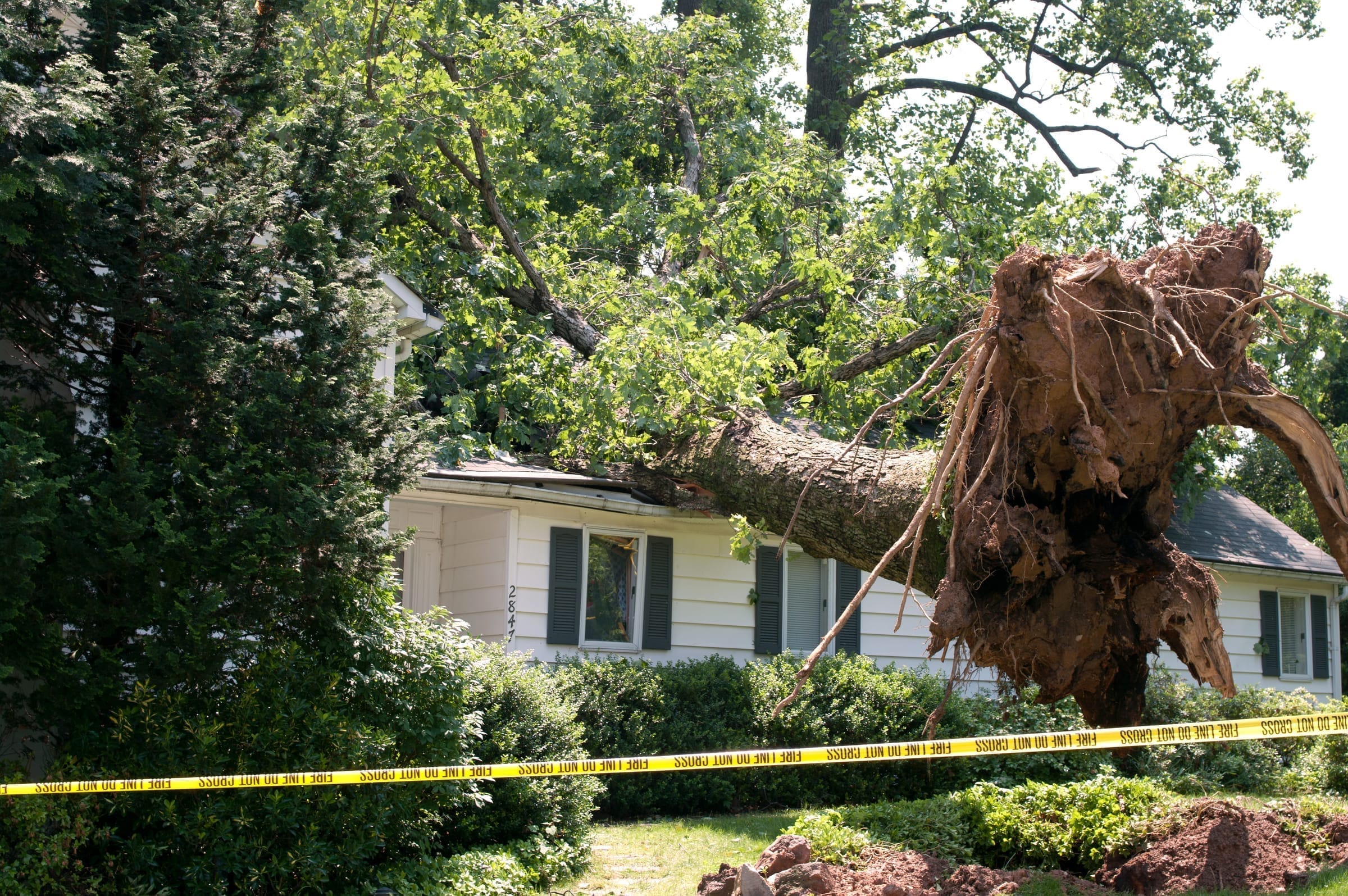
The 10 Most Dangerous Trees on a Florida Lot
Most of the trees we remove on emergency calls aren't dead — they looked fine from across the yard. Here are the 10 we see most often in the emergency queue, in roughly the order they show up.
Most of the trees we end up removing as urgent jobs aren't dead. They look fine from across the yard. The most dangerous trees on a Florida residential property usually have visible warning signs that get missed because the warnings are subtle. Here are the 10 we see most often — in roughly the order they show up in our emergency queue.
1. A mature water oak within fall-distance of the house
Water oaks are the most-removed oak in Southwest Florida for a reason. The species has a 40–60 year functional lifespan with predictable internal decay starting around age 30. The decay is rarely visible from outside; the tree often looks fine until a major storm or even just a windy afternoon takes the trunk down. If you have a water oak older than 30 within fall-distance of your roof, it's at or past its structural use-by date.
2. A queen palm with any visible lean
Queen palms are at the bottom of the UF/IFAS wind-resistance rankings (2/5) and dominate post-storm failure data. A queen palm leaning even slightly toward a structure is the textbook example of an avoidable emergency removal — proactive removal during the dry season costs a fraction of post-storm tree-on-structure work.
3. A live oak with fungal conks at the base
Live oak is the top wind-resistance species in Florida — but that doesn't make a specific specimen safe. Fungal conks at the base or root flare of any tree indicate substantial internal decay that's already happened. The structure is compromised regardless of how iconic the species is. We've removed mature heritage live oaks with hidden ganoderma or other decay; the conk visible at the base was the only outside warning.
4. A slash pine with construction damage history
Slash pines have shallow root systems relative to their height. Heavy equipment compaction within the dripline during construction damages the root system in ways that don't show up immediately — but show up over 3–5 years as slow decline followed by sudden failure in moderate wind. If you've had construction or hardscape work within 30 feet of a mature slash pine in the last 5 years, the tree is on a watch list.
5. A tall Washingtonia palm near anything you care about
Mexican fan palm (Washingtonia robusta) earns 2/5 in hurricane wind surveys. The slim trunk combined with substantial height (80+ ft at maturity) creates a structurally vulnerable combination. Tall Washingtonias near houses, pool cages, or driveways are routine post-storm failures.
6. Any tree with a recent lean change
A tree that's leaning a few degrees more than it was last year almost always has root-plate compromise. The root system has shifted in soil and is no longer providing full anchoring. Even healthy-looking foliage doesn't mean the root system is sound. New lean is a watch-list-to-removal call depending on the tree's species, location, and how much shift has occurred.
“A tree that's leaning a few degrees more than it was last year almost always has root-plate compromise.”
7. Co-dominant stems with included bark
When a tree splits into two roughly-equal trunks low on the structure, the joint where they meet is mechanically weak — especially when bark gets pinched between the two stems during growth (called included bark). The result is a V-shaped joint with a fault line down the middle. Co-dominant stems on mature shade trees are the classic hurricane failure point. Cabling can sometimes save these specimens; other times removal is the right call.
8. Dead trees within fall-distance
Dead trees are sometimes more dangerous than living ones — wood dries out, bark sheds, predictable decay accelerates. A dead tree near a structure is on a countdown to failure even in ordinary wind events. Insurance frequently won't cover damage from a known-dead tree that the owner failed to remove.
9. Hollow trunks
Hollow trunks aren't always visible from outside. A pro probes for decay before committing to any removal plan. The signs that a trunk might be hollow: a basal cavity you can see, fungal conks, woodpecker activity, large carpenter-ant or termite presence, or a hollow sound when the trunk is rapped. Hollow trees can stand for years — until they suddenly don't.
10. Australian pine — anywhere
Australian pine (Casuarina equisetifolia) is a state-prohibited Cat I invasive. It's also structurally weak — the slim trunk and shallow root system make it fall in stiff breezes, not just hurricanes. Mature Australian pines fall in tropical storms that don't damage native species. If you have Australian pines on your property, removal is recommended for both ecological and structural reasons.
What to do if you have one of these
Photo-bid any of the 10 scenarios above. We can usually give you a written assessment from 4–6 photos: full tree from a distance, close-up of base, target side, any visible damage or decay. The bid is free and we'll tell you whether your situation is a watch-list tree (annual monitoring) or a removal call (do it before the next storm).
Frequently asked.
Should I just preemptively remove every species on this list?
No — species alone doesn't determine risk. A healthy slash pine well away from any structure is fine to keep. A healthy laurel oak that's not threatening any building is fine to keep. The risk equation is species + age + condition + proximity to targets. We assess each tree on its specific situation, not on species blanket rules.
What does proactive removal cost vs. emergency removal?
Variable, but as a rough rule: proactive removal during the dry season runs 30–60% of equivalent post-storm emergency removal. Crane and rigging time on a damaged tree above a roof is much more expensive than on a healthy tree in a clear yard. Add insurance documentation costs and the math gets clearer.
Will my insurance cover tree damage if I knew the tree was hazardous?
Often partially, but with complications. Florida tree-fall liability law generally requires reasonable care — annual inspection of mature trees, addressing obvious hazards. A tree that fell in a hurricane from healthy condition is typically covered; a tree that fell from documented decline can be a coverage fight, especially if you're claiming damage to a neighbor's property.
Got a specific tree you want to talk about?
Send a few photos and we'll come back with a real written quote — or just a second opinion.