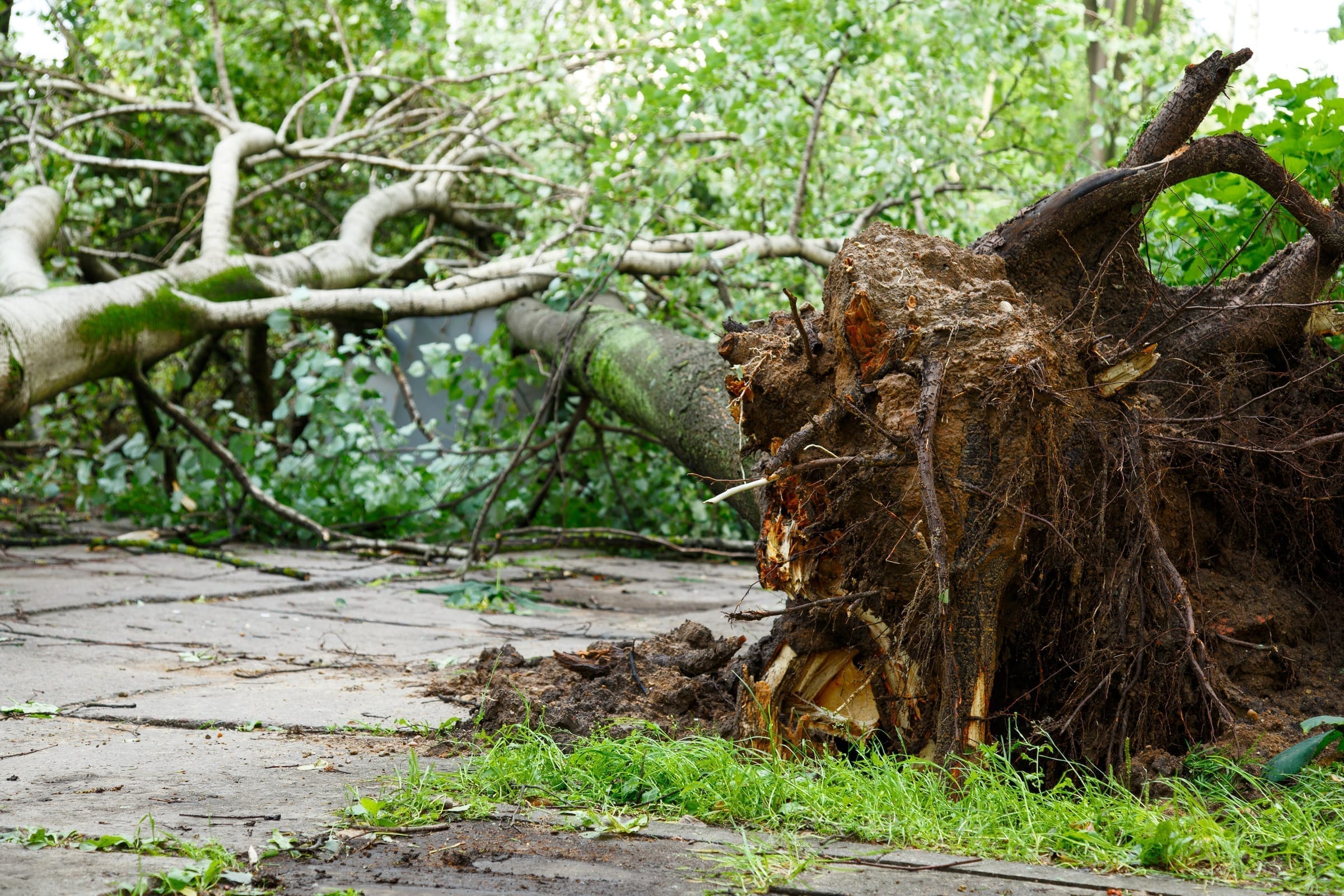
Storm Emergency Response
Active-emergency priority. Tree-on-structure first, blocking-access second, hanging-hazard third, cleanup last.
After a named storm, road conditions, fuel, power-line status, and crew safety determine what's physically possible. Active emergencies are triaged first. Honest scheduling, written estimates, insurance-grade documentation.
Every job is custom. We assemble the right crew and equipment for your specific trees — one yard takes a climber and a ladder, another takes a crane crew and a full ground team. Photo bid → written scope → work done as written.
Things to know.
- Tree-on-structure emergencies are top priority — triaged first in any storm queue.
- After a hurricane, road access, fuel availability, and crew safety determine realistic response times.
- Tarp-and-secure first response stops further water damage while permanent repairs are scheduled.
- Documentation matters — time-stamped photos and itemized scope support insurance claims.
- Downed power lines: assume live, stay away, call the utility. Tree-service crews don't touch energized lines.
- Hidden damage often shows up months later — root-plate lift, internal trunk cracks, decay from storm wounds.
- Storm-damaged trees that survived can become bigger hazards than the ones that fell. Post-storm structural assessment matters.
When the job gets complex.
Scenarios that change the crew size, equipment, or timeline. We assess these on the photo bid and tell you what your job looks like before quoting.
- Tree on a structure with active interior damage.
- Tree blocking driveway or road access.
- Tree near or on a power line — utility coordination required.
- Multiple trees on a single property with hazard priority calls needed.
- Heritage / protected trees requiring permits even in emergency situations.
What affects the price.
No two trees are the same. These are the variables that move the estimate — so the photo bid lands close to the final number.
- Job urgency — active emergencies vs. routine cleanup.
- Crane vs. climb access.
- Structural target — roof, AC unit, pool cage, fence.
- Documentation depth — basic record vs. full claim package.
- Disposal volume after a major storm event.
Permits, protected trees, Florida-specific notes.
After every named-storm event we work down a list: tree-on-structure first, blocking-access second, hanging-hazard third, routine cleanup last. Maintenance-contract holders get priority slots. We text honest ETAs instead of marketing promises.
Frequently asked.
How fast can you respond after a hurricane?
It depends on the storm. After a tropical-storm-strength event, typically within 24 hours. After a major hurricane (Cat 3+) with widespread infrastructure damage, road clearance and fuel availability slow everyone down. We text every customer on our list with an honest ETA.
Will my insurance cover storm tree work?
Usually yes for removals when a tree damaged a covered structure. We provide insurance-grade documentation (time-stamped photos, itemized scope) for your adjuster. Pre-storm pruning is rarely covered.
Will you work at night during a storm?
No. Active tree work in 50+ mph wind with falling debris is how crews get killed. We triage immediately after the storm passes when it's safe to move.
Send us a photo of your tree.
Real written quote for storm emergency response — sized to your specific trees, your specific property.