Wind Resistance Scoring: Why It Matters
How University of Florida ranks species after each major hurricane — and what to plant if you're rebuilding.
PUBLISHED May 12, 2026
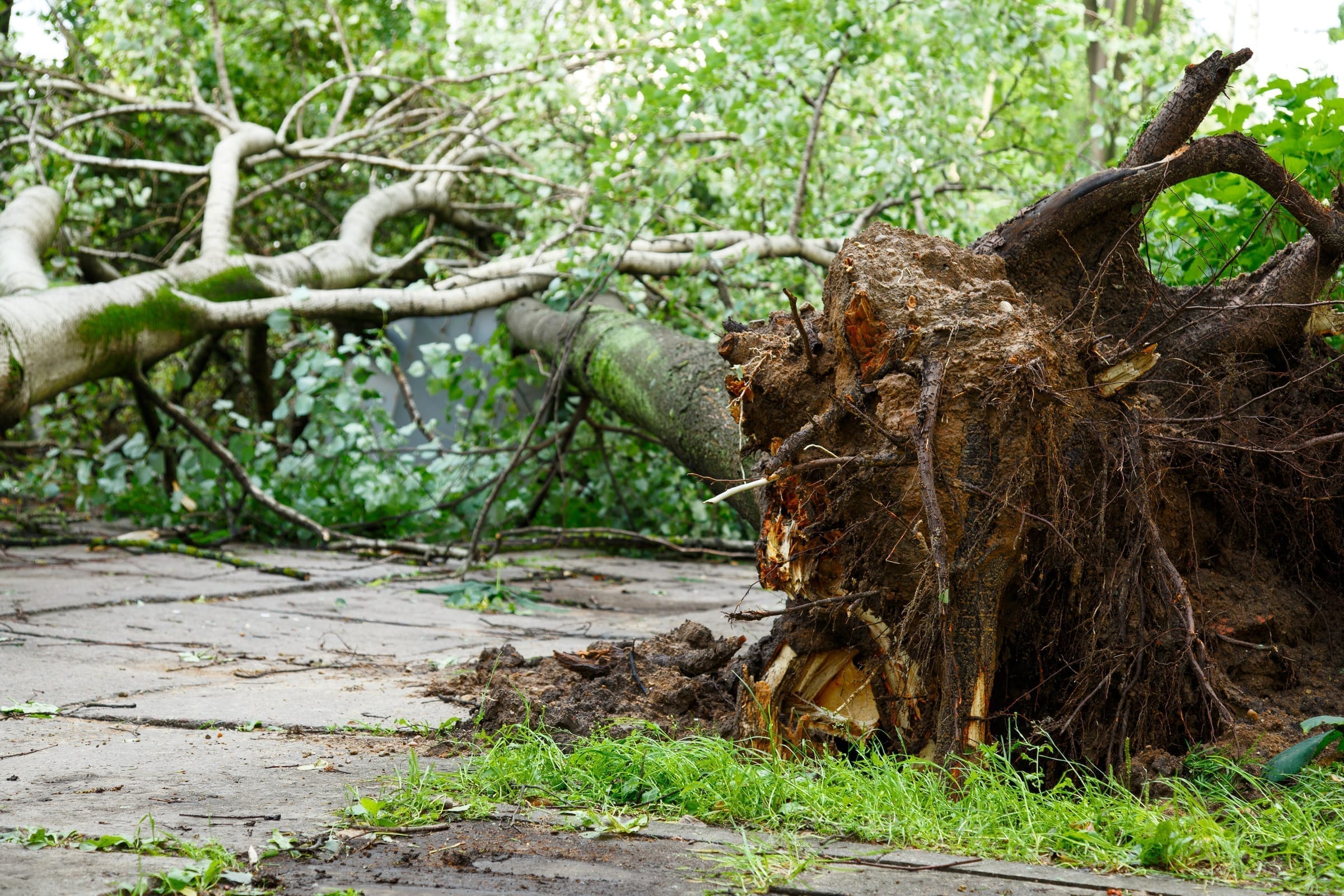
After every major Florida hurricane, the University of Florida IFAS extension publishes updated species wind-resistance data — based on what actually fell vs. what stood. Over decades of storms, a clear ranking has emerged. Some species reliably survive Cat-4 winds with minimal damage; others reliably fail. The list is publicly available, internally consistent, and ignored by most homeowners and many landscape contractors.
If you're planting new trees, this ranking should be the single biggest input into your species selection. If you have an existing yard, it should be how you prioritize the structural pruning, removal, and replacement decisions.
The 5-point scale, briefly
UF/IFAS classifies species into rough wind-resistance categories — typically presented as a 1-to-5 scale where 5 is highest. The classification is based on empirical post-hurricane field surveys across multiple major events: how many of each species survived, how many failed, and the typical failure mode (uprooting, trunk break, crown collapse).
A 5-rated species is one you'd actively recommend for new planting in hurricane country. A 1-rated species is one you'd remove if it were near a building you cared about.
Top wind performers (4–5 rating)
- Live Oak (Quercus virginiana) — bends, doesn't break. Heritage choice. Often the only mature tree still standing on a property after a Cat 4.
- Sabal Palm (Sabal palmetto) — flexible trunk, deep root system, fronds shed without taking the palm down. State tree for good reason.
- Bald Cypress (Taxodium distichum) — flexible, deep-rooted in wet sites, holds up well in wind.
- Southern Magnolia (Magnolia grandiflora) — dense crown, structurally sound, broadleaf evergreen that holds together.
- Gumbo Limbo (Bursera simaruba) — drops branches readily (and harmlessly) while keeping the trunk and main scaffolding.
- Mahogany (Swietenia mahagoni) — strong wind tolerance, valued for SW Florida coastal landscapes.
Bottom wind performers (1–2 rating)
- Queen Palm (Syagrus romanzoffiana) — brittle trunk, shallow root, frequent post-storm casualty. Avoid planting near anything you care about.
- Washingtonia Palm (Washingtonia robusta) — tall, thin, lightning magnet, susceptible to topping in high wind.
- Water Oak (Quercus nigra) — structurally weak, prone to internal decay, frequent uprooting.
- Laurel Oak (Quercus laurifolia) — similar to water oak; better than queen palm, worse than live oak.
- Australian Pine (Casuarina equisetifolia) — invasive; falls in stiff breezes, not even storms.
- Tabebuia (Tabebuia spp.) — ornamental, brittle wood, frequent breakage in storms.
How to use this for your yard
Three practical applications:
- If you're planting new — pick from the 4–5 list. Period. Cost difference at install is small; storm-replacement cost is enormous.
- If you have a 1–2 species near a building you care about — schedule structural pruning to reduce wind load and consider whether replacement makes sense over a 10-year window.
- If a 1–2 species comes down in a storm — replace it with a 4–5 species from the same general category. Don't replace queen palm with queen palm.
The structural pruning that improves wind score
A 4-rated tree that's been topped is no longer a 4-rated tree. Bad pruning destroys wind resistance just as effectively as wrong-species selection. The structural pruning that improves wind survival is the opposite of topping or lion-tailing: it's selective thinning to reduce sail area while preserving the tree's natural architecture, plus end-weight reduction on horizontal limbs.
Done annually or every other year, structural pruning meaningfully improves the wind score of any 3+ rated species. Done wrong (topping, hatracking, lion-tailing), it lowers wind score regardless of starting rating.
Frequently asked.
Have these rankings been verified by recent hurricanes?
Yes — UF/IFAS has updated the data after every major storm. Wilma (2005), Irma (2017), Michael (2018), and Ian (2022) all generated post-storm field surveys that confirmed and refined the species rankings. Live oak and sabal palm have held the top of the rankings consistently for decades; queen palm and water oak have held the bottom equally consistently.
Can I make my queen palm more wind-resistant?
Not meaningfully. The wind score is largely structural — trunk thickness, root architecture, crown profile — and these are species characteristics that don't change much with maintenance. Good annual care helps marginally. The honest answer is that if a queen palm is near something valuable, replacement is usually the better long-term call.
Should I replace my mature laurel oak?
Depends on its condition, location, and how risk-averse you are. A healthy laurel oak that's not threatening any structure is probably fine to keep with annual structural pruning. A laurel oak with any sign of internal decay (fungal conks, cavities, oozing bark), leaning toward a structure, or within fall-distance of something you care about is a replacement candidate. We can assess from photos.
Got a question on your specific tree?
Articles are useful, but a real photo bid gets you a species-specific answer for your property in writing.