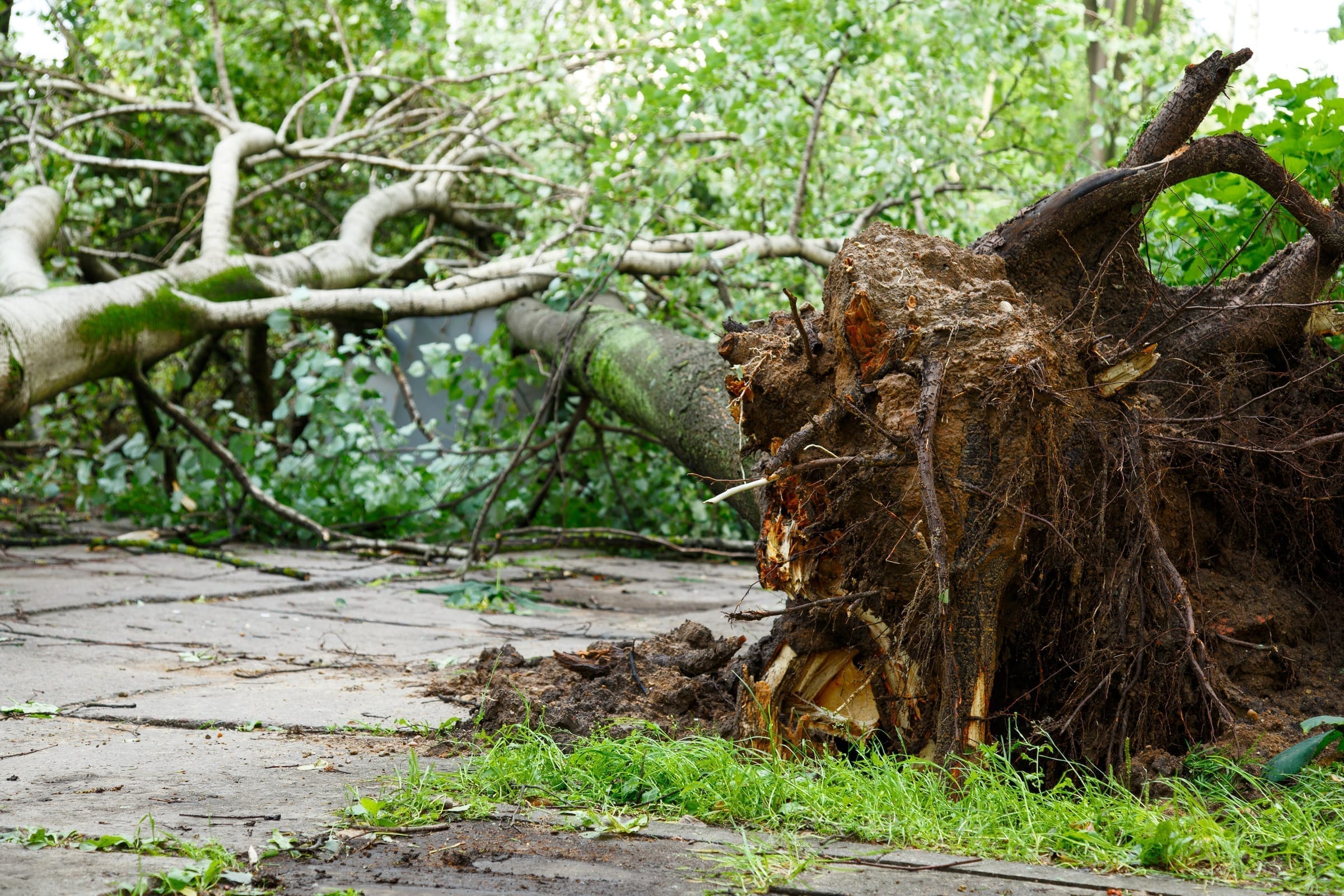
What the Last Five Florida Hurricanes Taught Us About Trees
Charley, Wilma, Irma, Michael, Ian. Five major storms in twenty years, each with post-event species surveys. The same species ranking emerged every time — and the data has implications for what you replant.
Florida's tree-performance data gets updated after every major hurricane. The University of Florida IFAS extension publishes post-storm species surveys; local arborist networks compile field observations; insurance companies aggregate damage claims by species. Across five major Florida hurricanes in the last twenty years — Charley (2004), Wilma (2005), Irma (2017), Michael (2018), and Ian (2022) — the same species ranking has emerged every time.
If you're replanting after a storm, or selecting species for new construction, the consistency of that ranking is the most important thing to know.
The species that consistently survive
Across all five storms, the same species cluster at the top of the wind-resistance rankings:
- Live oak (Quercus virginiana) — the most reliable hurricane survivor. Mature heritage specimens in Punta Gorda survived Charley, in the Keys survived Irma, in Fort Myers survived Ian. Often the only mature tree still standing after a major event.
- Sabal palm (Sabal palmetto) — Florida's state tree earns its standing. Flexible trunk, deep root system, fronds shed without trunk failure.
- Bald cypress (Taxodium distichum) — flexible structure, deep roots, deciduous (sheds leaves in extreme wind reducing sail area).
- Southern magnolia (Magnolia grandiflora) — dense crown, structurally sound, broadleaf evergreen that holds together.
- Gumbo limbo (Bursera simaruba) — sacrifices branches readily while keeping the trunk intact.
- Mahogany (Swietenia mahagoni) — flexible, deep-rooted, dense crown that resists tearing.
The species that consistently fail
The same species also cluster at the bottom across every major storm:
- Queen palm (Syagrus romanzoffiana) — top of the failure list in every storm. Brittle trunk, shallow root, predictable. The species that dominates the post-storm removal queue.
- Water oak (Quercus nigra) — brittle wood, internal decay, predictable trunk failures.
- Washingtonia palm (Washingtonia robusta) — slim trunk, lightning attractor, frequent failures.
- Laurel oak (Quercus laurifolia) — better than water oak but worse than live oak. Hidden decay drives failures.
- Australian pine (Casuarina equisetifolia) — falls in tropical storms, not just hurricanes.
The replant implication
If your species selection is essentially a bet on the next major hurricane — and it is, in Florida — the data is unambiguous. Plant from the top list. Don't plant from the bottom list.
Property owners who replanted with live oak, sabal palm, and other top-tier species after earlier storms typically have mature canopy now that survived subsequent storms. Property owners who replanted with queen palm, water oak, or other lower-tier species often had to replant again. The species selection compounds with each storm cycle.
“If your species selection is a bet on the next hurricane, the data is unambiguous.”
The maintenance variable
Even top-tier species fail when poorly maintained. A topped live oak isn't the same hurricane performer as an unmolested live oak. A water-stressed sabal palm isn't a bulletproof sabal palm. Structural pruning to ANSI A300 standards substantially improves storm survival across every species — and bad pruning destroys it.
The combination that matters: top-tier species plus proper maintenance. Either alone is incomplete.
Hidden damage post-storm
Trees that visibly survive a major storm often have hidden damage that emerges over the following 1–3 years: root-plate lift (a tree that's a few degrees more leaning than before), internal trunk cracks at storm wounds, slow canopy decline. Post-storm structural assessment for the 3–5 years after a major hurricane catches these problems early — when they're cheaper to address.
Frequently asked.
Should I remove a queen palm before the next hurricane?
If it's within fall-distance of your house or other valuable property, yes — usually. Five hurricanes of data point in the same direction: queen palms fall reliably in major storms. Proactive removal during the dry season costs a fraction of post-storm tree-on-structure response.
Does pruning help wind survival?
Done right, yes — ANSI A300 structural pruning measurably improves storm survival across every wind-vulnerable species. Done wrong (topping, lion-tailing), it destroys wind resistance. The single most useful thing you can do for a mature tree's hurricane survival is one structural prune in late summer, every other year.
What about new species not in this dataset?
Some recently-introduced or recently-popularized species don't have multi-storm data behind them — foxtail palm is one example. UF/IFAS surveys are adding data with each storm. For new-to-Florida species, we look at structural characteristics (trunk thickness vs height, root system, crown density) as proxies. The fundamentals usually predict the data.
Got a specific tree you want to talk about?
Send a few photos and we'll come back with a real written quote — or just a second opinion.