Trimming & Pruning
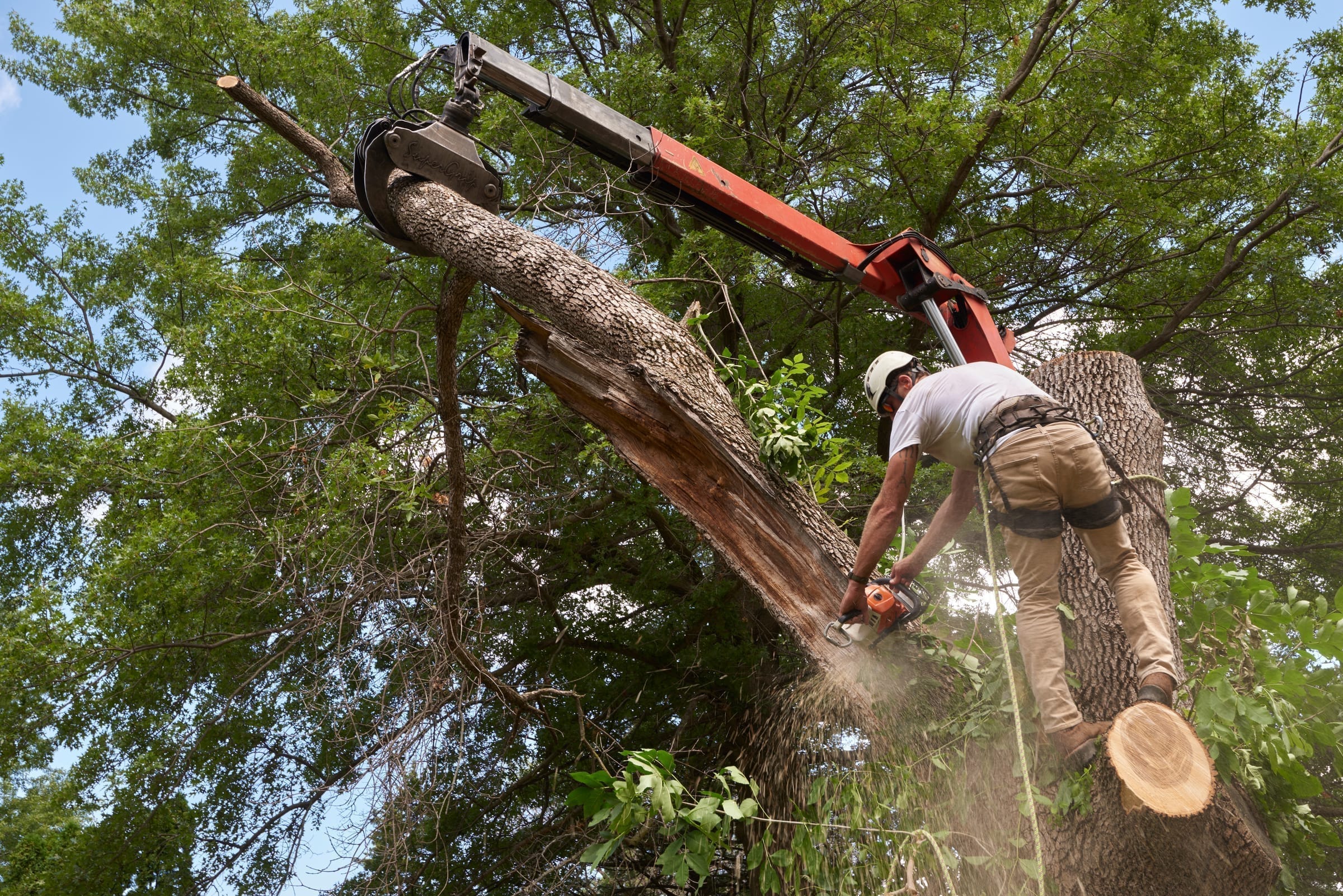
Done on the right tree, in the right season, with the right cuts. Climbing crews, bucket trucks, or cranes — sized to the job.
Florida's most common cause of tree decline isn't storms — it's bad pruning. ANSI A300 standards, cuts at the branch collar, the right seasonal windows for each species. From light deadwood cleanup to major structural reduction on heritage live oaks, we scale the crew and equipment to the tree, not the other way around.
Every job is custom. We assemble the right crew and equipment for your specific trees — one yard takes a climber and a ladder, another takes a crane crew and a full ground team. Photo bid → written scope → work done as written.
Things to know.
- ANSI A300 is the industry standard for pruning practice. Cuts at the branch collar, no painted wound sealants, no over-pruning.
- Maximum 25% live canopy in any single year on a healthy mature tree. More than that triggers stress responses and weak regrowth.
- Spring is oak-wilt season in Florida (March–June). Pruning oaks in spring requires sterilized tools between every cut.
- Late winter (January–early March) is the best window for heavy structural work on most Florida hardwoods — before the spring growth flush.
- Late summer (August) is the pre-storm structural pruning window — work done now reduces wind-damage risk through hurricane season.
- Palms need a totally different approach than trees. Palms don't compartmentalize damage; over-pruning starves them slowly.
- Sterilize between every cut on susceptible species. Oak wilt and palm fusarium both spread on contaminated tools.
- Climbing spikes belong on removals, not on living trees. Puncture wounds invite disease.
- Lion-tailing (stripping interior branches, leaving end-tufts) is a fast way to make a tree wind-vulnerable. Avoid contractors who do this.
- Storm-prep structural pruning isn't decorative — it measurably reduces failure rates in hurricane wind.
When the job gets complex.
Scenarios that change the crew size, equipment, or timeline. We assess these on the photo bid and tell you what your job looks like before quoting.
- Heritage live oaks requiring permit-compliant pruning.
- Trees over power lines (utility coordination required).
- Crane-required work on multi-acre properties or remote tall specimens.
- Trees showing decay or structural weakness that need cabling alongside pruning.
- Spring oak-wilt season pruning with full tool sterilization protocols.
What affects the price.
No two trees are the same. These are the variables that move the estimate — so the photo bid lands close to the final number.
- Tree size and crown volume — bigger trees, more cutting time.
- Number of trees and how close they are to each other.
- Reduction scope — light cleanup vs. major structural reduction.
- Access — bucket-truck reach vs. climb-required vs. crane.
- Disposal volume — small jobs chip on site, large jobs need haul-out.
Permits, protected trees, Florida-specific notes.
Best pruning windows: late winter (Jan–Feb) for most hardwoods; late summer (August) for storm-prep structural work; year-round for palms with proper sterilization. Avoid heavy oak work in spring oak-wilt season unless full tool sterilization protocols are in use.
Frequently asked.
When's the best time to trim Florida trees?
Most hardwoods: late winter (mid-January through early March). Storm-prep structural pruning: late summer (August). Palms: annual trim, typically late spring or summer. Avoid heavy oak pruning in spring oak-wilt season unless tools are sterilized between every cut.
How much of the canopy can you take in one trim?
ANSI A300 standard: maximum 25% of live canopy in any single year on a healthy mature tree. For most maintenance trims, 10–15% is typical. Bigger reductions are split across two seasons.
Will you do whatever I ask, including aggressive cuts?
Yes — every job is custom. We write up the agreed scope before any cut, and we execute what's in writing. For aggressive scopes, we'll note the long-term implications for the tree so you have the full picture, and proceed with what you approve.
Do you work on palms differently than trees?
Yes. Palms have different biology — they don't compartmentalize damage the way trees do — and need a different pruning approach. We have a dedicated palm specialty service for that work.
Send us a photo of your tree.
Real written quote for trimming & pruning — sized to your specific trees, your specific property.