Palm Specialty
Trimming and care from crews who actually know palms. Florida species, Florida care, written scope.
Palms aren't trees — different biology, different rules. Every job written up and agreed before any cut.
Every job is custom. We assemble the right crew and equipment for your specific trees — one yard takes a climber and a ladder, another takes a crane crew and a full ground team. Photo bid → written scope → work done as written.
Things to know.
- Palms don't compartmentalize damage the way trees do. Every frond is photosynthesis the palm depends on.
- The University of Florida IFAS Extension recommends only removing fronds at the 9-and-3 horizontal line or below — healthy fronds above stay.
- Sabal palms: one annual trim is plenty. Royal palms: self-cleaning, basically don't need trimming.
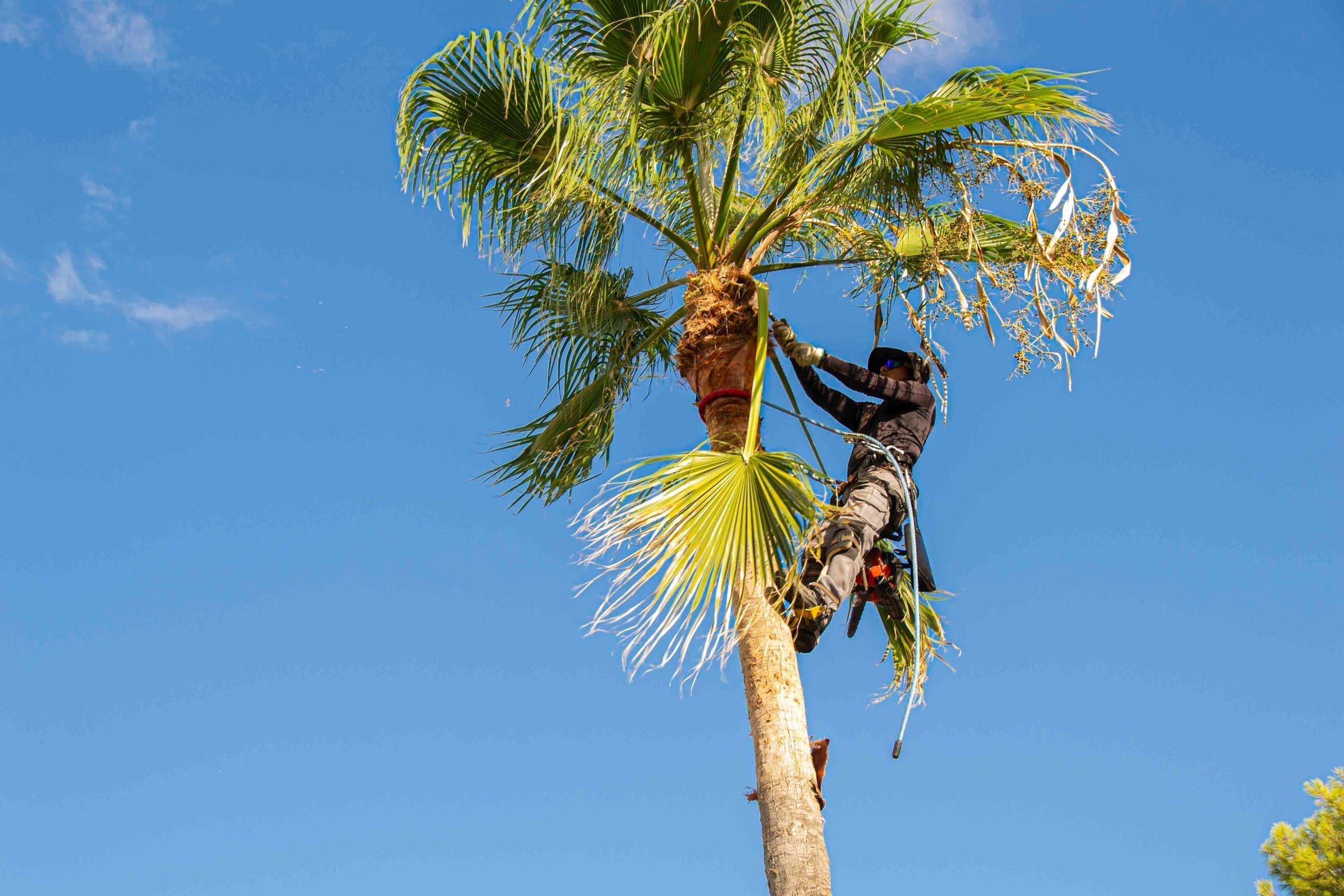
- Don't spike-climb a living palm. Puncture wounds invite fusarium wilt and ganoderma butt rot.
- Sterilize blades between every palm. Fusarium wilt spreads on contaminated tools.
- Inflorescences (flower stalks) can be removed before fruit drop so you don't get black drupes in the pool.
- Palms in sandy Florida soil often show classic nutrient deficiencies — yellowing fronds with green veins, smaller new fronds — that benefit from deep-root care.
- Disease watch: fusarium wilt (asymmetric frond yellowing), ganoderma butt rot (basal conk), lethal bronzing (rapid decline of certain species).
When the job gets complex.
Scenarios that change the crew size, equipment, or timeline. We assess these on the photo bid and tell you what your job looks like before quoting.
- Tall Washingtonia removal — slim trunks at 80+ ft require specific rigging.
- Royal palms in tight residential lots — large frond drop zones.
- Coconut palms above pedestrian areas — falling coconut hazard.
- Diseased palms (fusarium, ganoderma, lethal bronzing) requiring proper disposal protocols.
What affects the price.
No two trees are the same. These are the variables that move the estimate — so the photo bid lands close to the final number.
- Palm height — Washingtonias at 80 ft cost more than 25-ft Christmas palms.
- Frond count and trim scope.
- Number of palms and proximity.
- Boot cleanup on sabals — labor-intensive but optional.
- Access — bucket truck reach vs. climb-only.
Permits, protected trees, Florida-specific notes.
Palms most commonly serviced in SW Florida: sabal palm (Florida's state tree, hurricane-tough), royal palm (signature ornamental), queen palm (storm-vulnerable but everywhere), coconut palm (coastal), Washingtonia (tall fan palm), foxtail palm, Christmas palm.
Frequently asked.
Will you do whatever cut I want?
Yes — every job is custom and what's in writing gets done. For aggressive scopes (heavy frond removal, what some companies call 'hurricane cutting'), we'll note the horticultural implications so you have the full picture, and proceed with what you approve.
How often should I trim my palms?
Sabal palms: once a year for boot cleanup and dead fronds. Royal palms: self-cleaning, rarely need trimming. Queen and Washingtonia palms: once a year for tidiness. Coconut palms: as needed for falling-coconut safety.
Why don't you climb with spikes?
Spike climbing punctures the palm trunk. Those puncture wounds are entry points for fusarium wilt and ganoderma butt rot — diseases that kill palms slowly. Rigging without spikes is the disease-conscious approach on living palms.
Send us a photo of your tree.
Real written quote for palm specialty — sized to your specific trees, your specific property.