Trees That Make Florida Sneeze: A Pollen Calendar
Oak pollen in March, melaleuca year-round, and the surprisingly low-pollen alternatives most homeowners don't know about. A Southwest Florida tree allergy guide for people whose eyes itch from January through July.
If your eyes itch from January through July in Southwest Florida, you're not imagining it. Florida's long warm growing season means there's almost always something pollinating — and the species responsible for the worst of it are concentrated in residential neighborhoods, not in the wild.
Here's the Southwest Florida pollen calendar by tree species, plus the lower-allergy alternatives most homeowners don't know about.
January–February: Tabebuia, early oaks, juniper
Florida's allergy season starts earlier than most people expect. By late January, tabebuia is blooming in South Florida, and early oak species are dropping pollen across the southern part of the state. Florida red cedar and other juniper-family trees release pollen in this window too — high-allergen for sensitive people.
March–May: peak oak season (the big one)
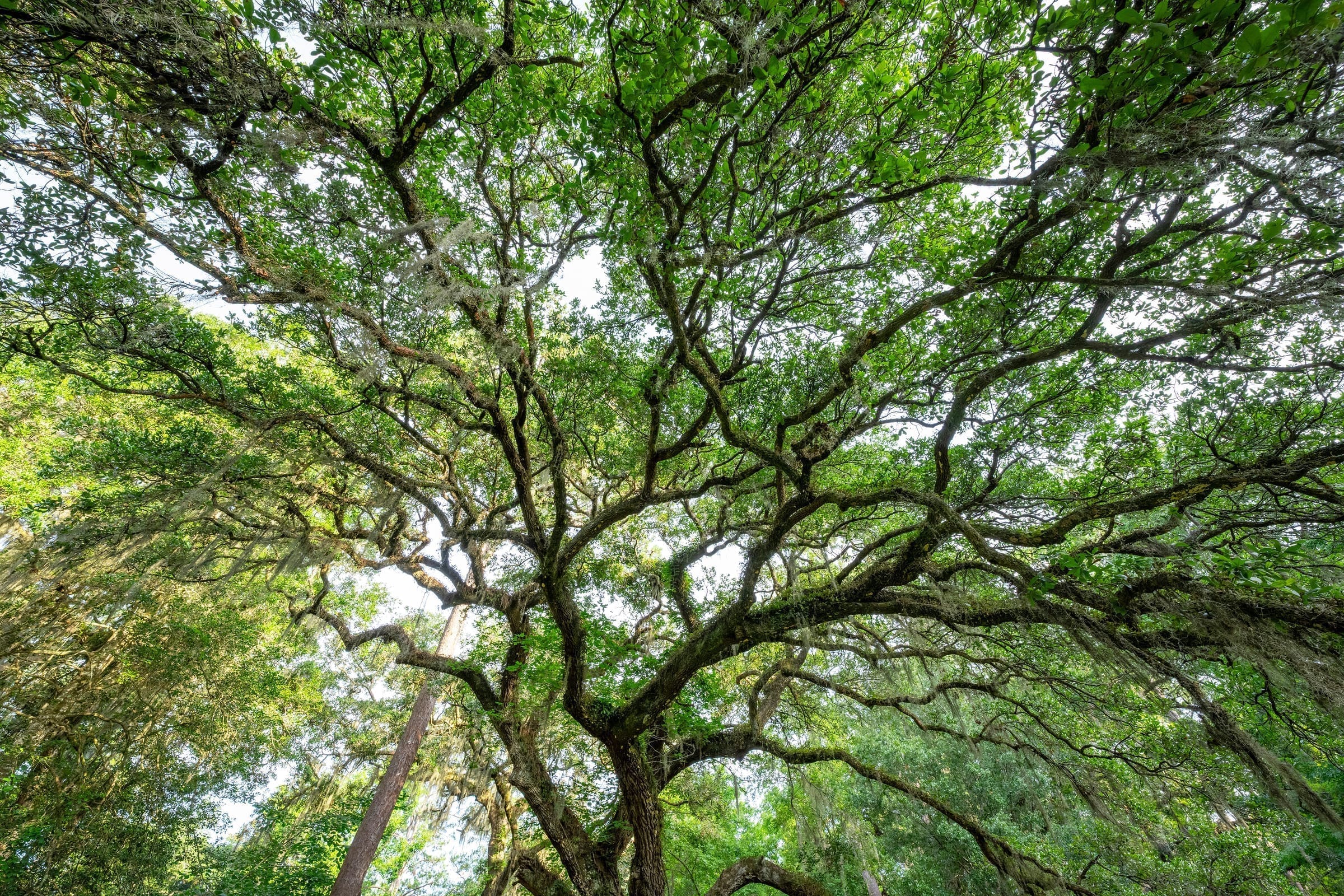
Florida's worst tree allergy month is March, with the heaviest oak pollen runs typically in the last week of March and first two weeks of April. Live oak, laurel oak, water oak, sand live oak — all of them release massive quantities of wind-borne pollen during this window. If you live in a heritage-oak neighborhood (Hyde Park, McGregor, downtown Punta Gorda), the yellow film on your car in late March is mostly oak pollen.
This is also the season for pruning sterilization protocols on oaks (oak wilt is spread by sap-feeding beetles attracted to fresh cuts during the same window). Don't schedule heavy oak work in March–May unless your contractor is sterilizing tools between every cut.
“If you live in a heritage-oak neighborhood, the yellow film on your car in late March is mostly oak pollen.”
Year-round: melaleuca, the invasive that just keeps going
Melaleuca (the invasive paperbark tree) is one of the worst allergenic trees in Florida — and unlike oak, it doesn't have a clean pollen season. Melaleuca produces successive flushes of bottle-brush flowers nearly year-round, with multiple major bloom events per year. South Florida's Everglades-adjacent neighborhoods often have significant melaleuca presence, and the constant pollen contributes substantially to year-round allergy symptoms for sensitive residents.
Melaleuca is a state-prohibited Category I invasive. Removing it from your property both improves local allergy load and removes a state-listed invasive.
May–June: pine pollen (big yellow clouds)
Slash pine, longleaf pine, and other Florida pines release pollen in late May and June — the bright yellow clouds you sometimes see drifting from pine flatwoods on a windy day. Pine pollen grains are individually large, which makes them less aerodynamically efficient at reaching deep airways than oak pollen, but the sheer volume causes substantial issues for sensitive people.
Lower-allergy alternatives most homeowners don't know about
The general rule: trees with showy insect-pollinated flowers (magnolia, gumbo limbo, royal poinciana, jacaranda, mahogany) are usually lower-allergen than wind-pollinated trees with inconspicuous flowers (oaks, pines, melaleuca, junipers).
- Palms (sabal, royal, queen, coconut, Christmas) — most palm species produce flowers that aren't significant wind-pollen sources. Insect-pollinated rather than wind-pollinated.
- Magnolia — large, fragrant, insect-pollinated flowers. Very low wind-pollen contribution.
- Gumbo limbo — insect-pollinated, low allergen profile.
- Sea grape — coastal native, insect-pollinated.
- Mahogany — insect-pollinated, low allergen.
- Bald cypress — wind-pollinated but typically a brief and localized release; lower impact than oak.
If you're planting and you have allergies
Pick insect-pollinated species. Avoid melaleuca always (it's prohibited anyway). Be selective about oaks if you live downwind of a heritage neighborhood — adding more oak doesn't help your March allergy load. Sabal palm, royal palm, magnolia, gumbo limbo, mahogany, and most flowering ornamentals are good choices.
We can quote species selection as part of any tree-planting estimate, with allergy-load factored in if you mention it.
Frequently asked.
When is Florida's worst tree pollen month?
March, by a wide margin. The combination of oak pollen, late juniper, early pine, and various other species hitting their peak in March makes it the highest-pollen month in Southwest Florida. April runs second, with continued oak and pine load. By late May, the worst is usually over for the major wind-pollinators.
Are palm trees allergenic?
Most palm species produce inconspicuous insect-pollinated flowers rather than wind-borne pollen. Sabal, royal, queen, coconut, and Christmas palms are all low-allergen species. The exception is some date palms that produce wind-borne pollen in significant volume — Phoenix species sometimes contribute to spring allergy loads in heavily-planted residential areas.
Should I remove my oak to reduce my allergies?
Almost certainly no. A single mature oak in a neighborhood full of mature oaks doesn't meaningfully change your local pollen exposure — the regional pollen load is the issue, not your individual tree. Removing a heritage oak for allergy relief gives up a 200-year asset for negligible benefit. If you're considering new plantings, pick low-allergen species instead.
Got a specific tree you want to talk about?
Send a few photos and we'll come back with a real written quote — or just a second opinion.