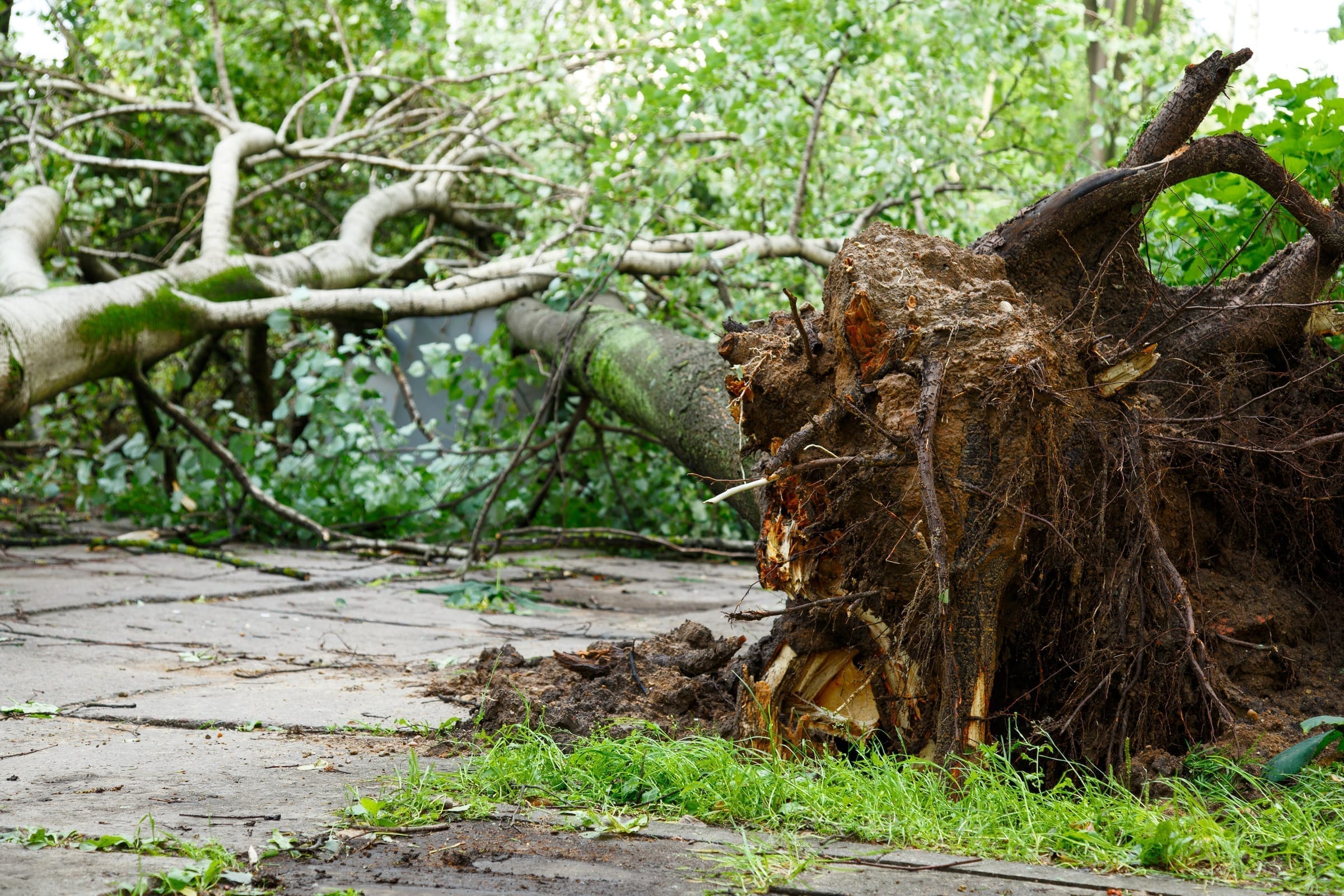
What Hurricane Ian Did to Southwest Florida's Trees (and What Survived)
Cat 4 made landfall at Cayo Costa on September 28, 2022. Three years later, the species ranking from the post-storm field surveys tells a clear story: live oaks stood, queen palms fell, and the lessons for replanting are obvious.
On September 28, 2022, Hurricane Ian made landfall at Cayo Costa with sustained winds of 150 mph — a strong Cat 4 storm that crossed Lee County and continued north through Charlotte County and into Central Florida. It was the most powerful storm to hit Southwest Florida since Hurricane Charley in 2004.
By the time the field surveys came in, the species ranking told the same story we've heard after every major Florida hurricane — and it has clear implications for what to replant.
The species that fell
Post-Ian survey data from UF/IFAS and local arborist networks consistently identified the same species as the major casualties:
- Queen palm — the most reliable storm casualty in any Florida hurricane. Slim brittle trunks broke at substantial percentages even in areas at the edge of Ian's wind field.
- Water oak — brittle wood, predictable internal decay, especially on mature specimens. Many of the 1960s–70s residential plantings in Charlotte County are now gone.
- Washingtonia palm — tall slim trunks failed under sustained winds. Multiple reports of trunk failures on mature specimens.
- Laurel oak — better than water oak but worse than live oak. Many mature specimens with hidden internal decay failed.
- Australian pine — invasive and structurally weak, fell in large numbers.
- Slash pine (mature stressed specimens) — the species varied widely; healthy specimens often stood, post-construction-stressed specimens often didn't.
The species that stood
The species that consistently survived Ian's winds in good condition:
- Live oak — heritage specimens in Punta Gorda, Fort Myers, and Sanibel survived with mostly canopy damage and minor limb loss. The species ranking as the most reliable hurricane survivor held up again.
- Sabal palm — Florida's state tree shed fronds but trees themselves stayed standing in vast majority of cases. Confirmed top-tier wind performer.
- Bald cypress — flexible trunk, deep root system. Cypress stands took limited damage.
- Southern magnolia — dense crown and flexible structure handled the wind reasonably well.
- Gumbo limbo — drops branches readily (and harmlessly) while keeping the trunk and main scaffolding. Mature specimens largely survived.
- Royal palm — flexible structure, deep root system. Most mature royals survived intact.
“Heritage live oaks in Punta Gorda survived Ian the same way they survived Charley in 2004 — by being live oaks.”
Hidden damage that emerged later
The trees that visibly survived Ian aren't all in the clear. Three years later, our crews continue to identify mature trees with hidden damage that's still working through the system:
- Root-plate lift — trees that survived but tilted a few degrees at the base. The root anchoring is compromised even when the tree looks upright. These are watch-list candidates for the next named storm.
- Internal trunk cracks — split crotches and hidden trunk damage that show up months or years later as slow canopy decline.
- Branch hangers — large dead limbs still suspended in mature canopies, waiting for the next high-wind event to come down.
- Stress-induced disease — trees stressed by storm wind that subsequently developed fungal infections or pest infestations.
What this means for replanting
Three years post-Ian, Southwest Florida property owners are still replanting trees they lost. The most important lesson from the storm data: pick from the species that survived, not from the species that fell.
- Replace queen palms with sabal palms (Florida's state tree, vastly better hurricane performance) or royal palms (similar tropical look, much better structure).
- Replace water oaks with live oaks (different lifespan entirely, heritage value over time).
- Replace Washingtonia palms with sabal palms or, for tropical look, foxtail palms (better hurricane performance than Washingtonia at similar mature height).
- Replace Australian pine (which you couldn't plant anyway — it's prohibited) with native windbreak species: sabal palm rows, slash pine, southern wax myrtle.
Frequently asked.
Is post-Ian tree work still happening in 2026?
Yes. Trees that visibly survived Ian sometimes have hidden damage that emerges over 1–3 years post-storm — root-plate lift, slow canopy decline, fungal infections that established in storm wounds. Annual structural assessment for the 3–5 years following a major storm is the recommended baseline, and we're still identifying Ian-related hazards on properties across Lee and Charlotte counties.
Should I take down trees that look fine but feel different?
Get an assessment first. A tree that's leaning a few degrees more than it was before the storm, or whose canopy looks sparser each year since 2022, is showing real warning signs. Hidden root-plate damage and slow decline are common post-major-storm. We can usually evaluate from photos and tell you whether it's a watch-list tree or a removal candidate.
Got a specific tree you want to talk about?
Send a few photos and we'll come back with a real written quote — or just a second opinion.