Pre-Construction Tree Protection
Most construction-related tree death is silent and slow — protect the root zone before the first truck arrives.
PUBLISHED May 12, 2026
Construction-related tree death is one of the most predictable and most preventable problems in Florida real estate. The trees look fine when the contractor's truck leaves; they decline silently over 3 to 5 years; the property owner discovers the loss years later and never connects it to the build. By then it's too late to do anything about it.
The damage almost always happens during construction, not after. The cause is almost always root-zone compaction from heavy equipment driving inside the dripline. Protection has to happen before the first truck arrives.
What the critical root zone (CRZ) actually means
The dripline (the outer edge of the canopy projected straight down) is the bare minimum. The critical root zone for protection is roughly 1.5 times the dripline radius. Most active feeder roots live in the top 18 inches of soil within this zone — and any equipment that compacts that soil destroys roots the tree depends on.
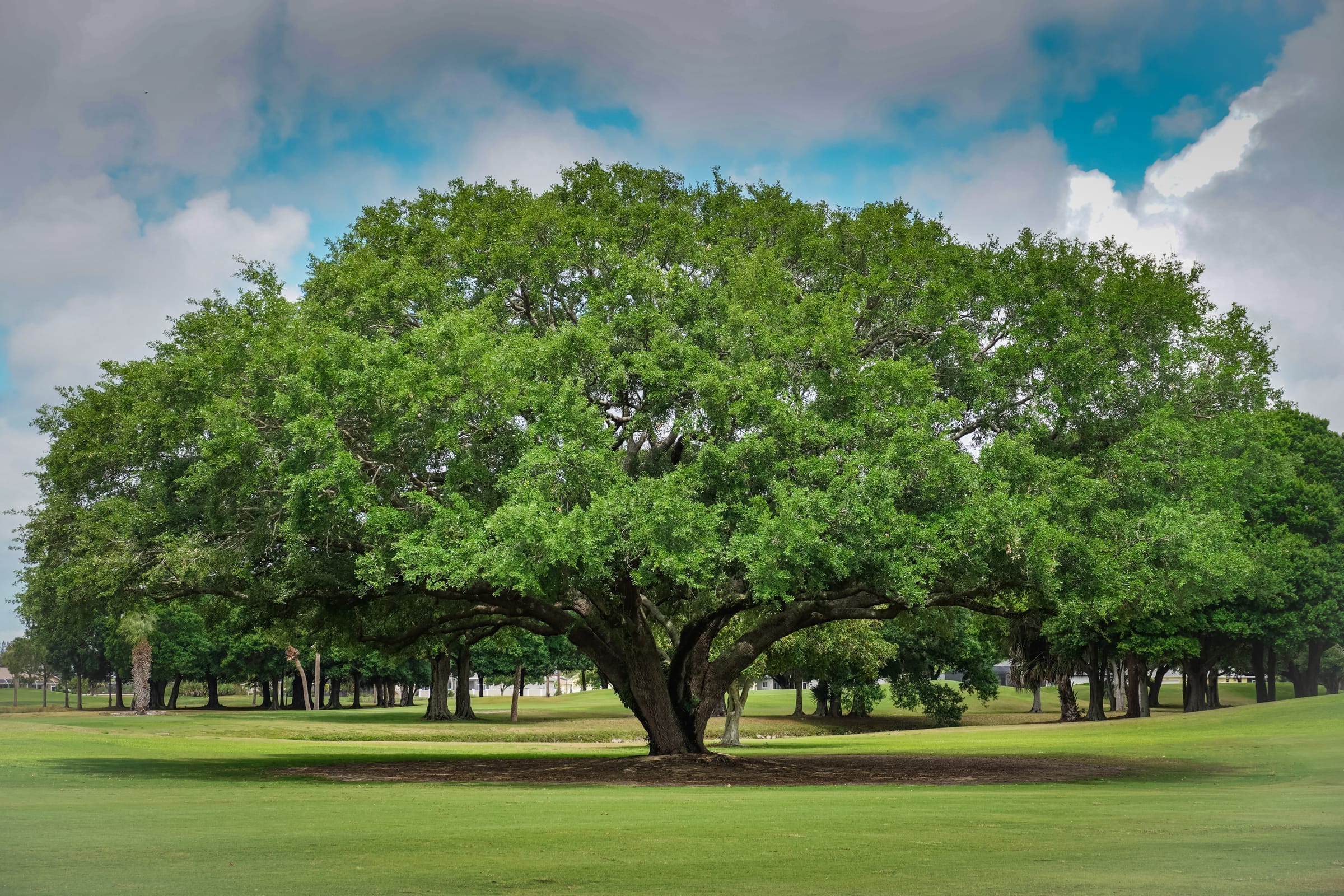
A mature live oak with a 40-foot canopy spread has a critical root zone roughly 30 feet in radius from the trunk. That's a much larger protected area than most construction plans acknowledge.
Real protection vs. theater
- Real protection: physical exclusion of all heavy equipment, material storage, and foot traffic from the entire CRZ for the duration of the build. Requires construction-grade fencing at the CRZ boundary, posted, and respected.
- Theater: caution tape around the trunk, signs reading 'tree protection,' or thin snow-fencing pulled into the dripline as soon as the contractor needs the space.
- Done right: chain-link or wood-stake construction fencing at the full CRZ radius, mulched protective layer inside the zone, signage with consequences for violation.
- Done wrong: any of the above gets moved during construction, and the soil inside the zone gets driven on once.
Post-construction recovery
Even with reasonable protection, mature trees near a construction site usually benefit from post-build recovery work: deep-root fertilization, soil decompaction (vertical aeration or air-spade treatment), and 1–2 years of close monitoring for stress symptoms. Trees that show early decline can sometimes be saved with prompt intervention; trees discovered 3 years later usually can't.
What to do before signing with a builder
- Get a pre-construction tree assessment by a tree professional, with a written report identifying which trees to protect and the required CRZ for each.
- Include tree-protection requirements in the construction contract, with specific consequences for violations.
- Have someone independent (your arborist, not the builder's) inspect the protection setup before any equipment arrives.
- Document the trees with photos at start, milestone, and completion of the build.
Frequently asked.
How big does the protection zone need to be?
Minimum: full dripline. Better: 1.5x dripline radius. Best: the full critical root zone as assessed by a tree professional, which can extend significantly beyond the dripline for some species. For a mature live oak, that's typically 25–40 feet from the trunk depending on size.
We're already mid-construction — is it too late?
Maybe not. Stopping further damage now (excluding equipment from the root zone for the remainder of the build) plus post-construction recovery work (deep-root care, decompaction, monitoring) can save trees that would otherwise decline. The earlier the intervention, the better the odds.
Why won't my builder agree to keep equipment out of the dripline?
Usually because it costs them time and adds complexity to staging. The honest path is to write it into the contract from the start. A reputable builder will agree to reasonable protection terms; a builder who pushes back hard on tree protection is telling you something about their priorities.
Got a question on your specific tree?
Articles are useful, but a real photo bid gets you a species-specific answer for your property in writing.