Protected Species in Florida
Mangroves, sea grapes, eagle-nest trees, and county-specific protections.
PUBLISHED May 12, 2026
Florida protects tree species at three levels: federal (eagle-nest trees and certain wetland trees), state (the Mangrove Trimming and Preservation Act covers all three mangrove species), and local (county and city heritage-tree ordinances). Most homeowners don't know what's protected on their own property until they get a code enforcement notice — or worse, a federal violation letter.
Here's the practical map of protected species in Southwest Florida and what each protection actually means.
Federally protected — eagle-nest trees
Any tree containing an active bald-eagle nest is protected under the federal Bald and Golden Eagle Protection Act. The protection persists year-round, not just during nesting season. Trimming or removal requires a federal permit, with substantial penalties for unpermitted work. If you have a large nest in a mature pine or live oak that you suspect might be an eagle's, photograph it and contact a wildlife biologist before any tree work begins.
State protected — mangroves
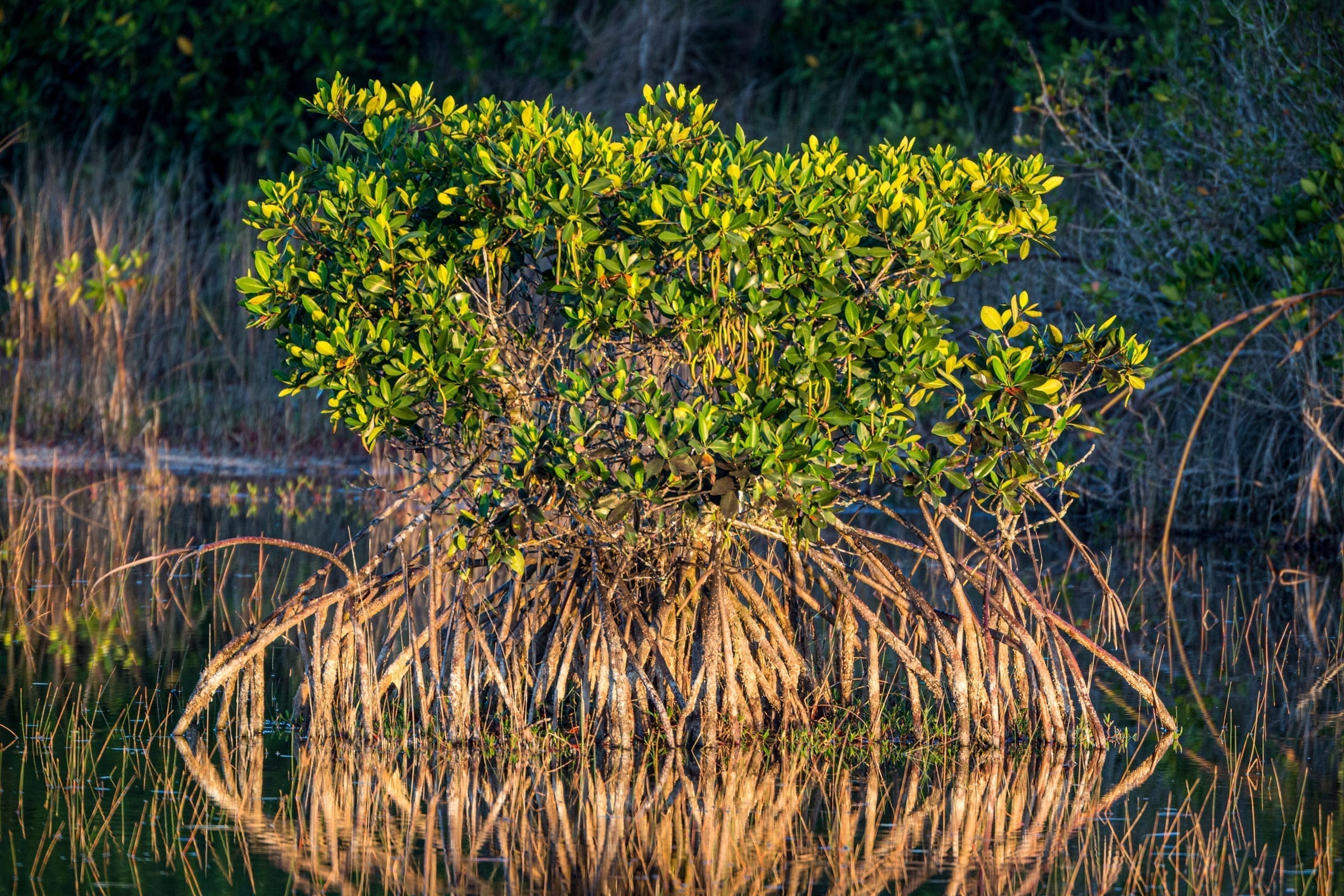
Red mangrove, black mangrove, and white mangrove are all protected under the Florida Mangrove Trimming and Preservation Act (MTPA). Trimming above certain heights or to certain percentages requires a state-certified Mangrove Trimming Professional. We have a full guide to MTPA — see the linked article in this category. Penalties for violations run into the thousands per affected tree plus mitigation requirements.
Locally protected — heritage trees
Most SW Florida jurisdictions protect heritage-class trees, typically large mature live oaks above a certain DBH threshold. Sarasota County, Sarasota city, Venice, Punta Gorda, Sanibel, Bonita Springs, and others all have local ordinances. Designation and protection vary, but the common pattern is: trees above the threshold require a permit for removal, and removal is denied or restricted for healthy specimens.
Some properties have specific designated heritage trees that come with explicit deed restrictions — usually noted in the property record but easy to miss during a real-estate transaction.
Sea grapes, gopher tortoise burrows, gopher apples
Beyond trees specifically: coastal sea grape is sometimes locally protected (Sanibel, for example). Gopher tortoise burrows (which often appear near scrub trees and palms) are state-protected — you cannot disturb the burrow, and tree work has to account for it. Certain rare plants associated with native habitats are also state-listed; the Florida Native Plant Society maintains current lists.
Frequently asked.
How do I know if a tree on my property is heritage-designated?
Two checks: (1) review the property record for explicit deed restrictions or designations, and (2) check the applicable county/city tree ordinance for DBH thresholds and species. Many mature live oaks meet heritage criteria automatically without being individually designated. We check both as part of any quote on a mature oak.
I think there's an eagle nest in my tree — what do I do?
Don't touch the tree, photograph the nest from a distance, and contact a Florida Fish and Wildlife Conservation Commission (FWC) wildlife biologist for an active-nest determination. If it's an active nest, federal rules apply and any tree work needs a federal permit. The penalties for taking down an active eagle nest tree are substantial.
Can I prune around a protected tree?
Limited light pruning is often allowed without a permit; significant trimming usually requires the same approval as removal. The threshold varies by jurisdiction. We check before any work on a protected tree — and if a permit is required, we coordinate the application.
Got a question on your specific tree?
Articles are useful, but a real photo bid gets you a species-specific answer for your property in writing.