Documenting Tree Damage for Insurance
What adjusters actually want to see — and why you should photograph healthy trees BEFORE a storm.
PUBLISHED May 12, 2026
Insurance claims for storm tree damage are won and lost on documentation. The single biggest determinant of how much you get paid — and how fast — is how the damage was photographed and itemized at the moment of claim filing. Here's the practical version of what works.
Before the storm: build a baseline
A 5-minute walk-around with your phone, photographing every significant tree on your property from consistent angles, costs nothing and is potentially worth thousands. Do this annually before June. Save the photos with their original metadata intact (date, GPS) in a cloud folder you'll have access to even if your computer is destroyed.
After a storm, an adjuster's first question is usually 'what did the tree look like before?' Without pre-storm photos, you're arguing from memory. With them, you have a documented baseline.
After the storm: document before you clean up
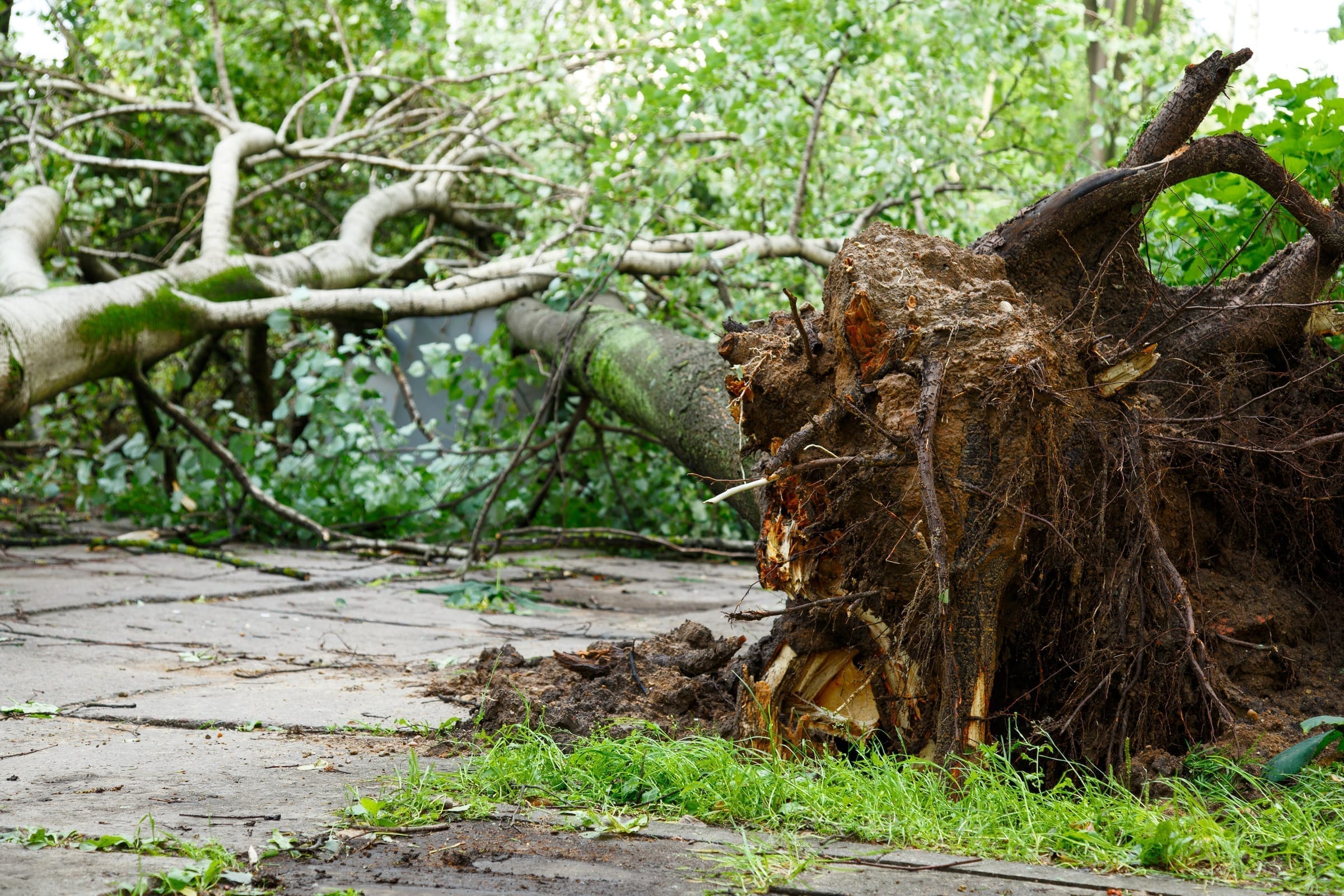
- Photograph the damaged tree from multiple angles before any cleanup begins.
- Photograph the structure damage (if any) before any tarps go up.
- Photograph the surrounding context — what fell, what direction, what it hit.
- Keep the originals with full EXIF metadata intact. Many adjusters now require this.
- If you must clean up before the adjuster arrives (safety, weather), photograph each pile of debris and each major piece separately.
The itemized scope-of-work adjusters expect
Most homeowner policies pay for tree work in the following categories: removing the tree from a covered structure, securing the structure from further damage (tarps, plywood, temporary repair), and disposing of debris. Pure yard cleanup (debris on lawn) is often partially or not covered. Pre-storm pruning is almost never covered. We provide insurance-format documentation as standard with any storm-response job — itemized by category, with photos, in the breakdown format adjusters expect.
If your claim gets denied
Claim denials happen, sometimes for reasons that aren't fair. The first step is a written appeal with additional documentation — sometimes including a credentialed arborist report establishing cause of damage. For situations where the dispute is significant, a public adjuster or a Florida property-claim attorney can be worth the cost. We can refer you to credentialed professionals if the situation warrants it.
Frequently asked.
Does my homeowner's insurance cover tree removal?
Usually only when the tree damaged a covered structure (house, garage, fence, sometimes pool cage). Removal of a tree that fell in the yard without hitting anything is rarely covered. Removal of a hazardous-but-not-yet-fallen tree is almost never covered. Pre-storm structural pruning is not insurance work. The specific coverage varies by policy and carrier.
Will you communicate directly with my adjuster?
If you ask us to, yes. We'll send our photo documentation and itemized scope-of-work directly to your adjuster and clarify technical questions. Most storm-response claims move faster when the contractor provides the documentation upfront.
What if my claim gets denied?
Honest answer: insurance carriers sometimes deny claims that should be paid. Our documentation gives an attorney or public adjuster a strong starting point for appeal. For complex denials we refer you to credentialed arborists for formal expert reports.
Got a question on your specific tree?
Articles are useful, but a real photo bid gets you a species-specific answer for your property in writing.