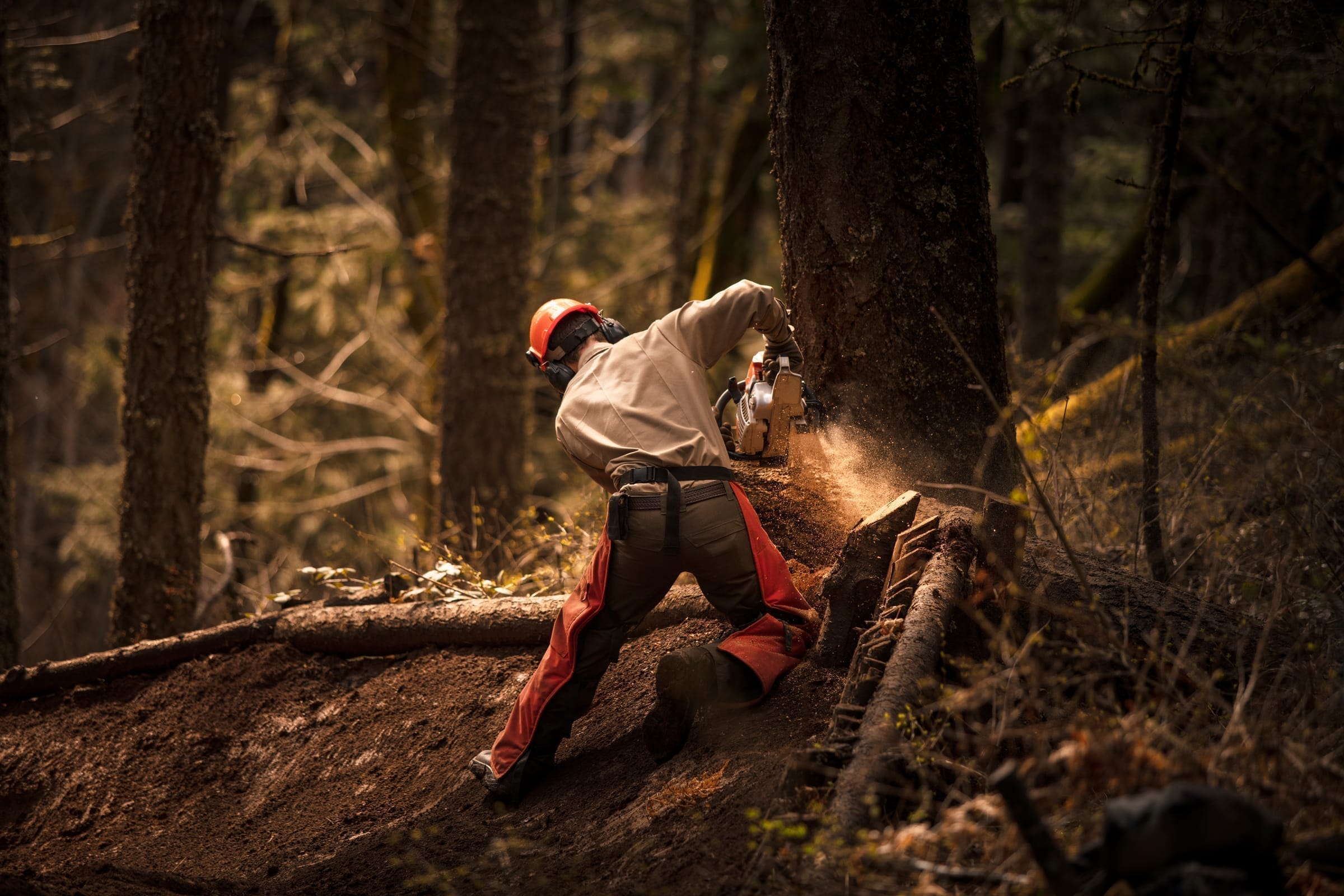
Does Homeowners Insurance Cover Tree Removal in Florida? The 2026 Rules
The short answer: usually only if the tree hit something covered — and even then the payout is often capped at $500 per tree. Here's how Florida policies actually treat tree removal in 2026, what the 2022–2023 reforms changed, and what Southwest Florida learned from Ian.
It's August 22. NOAA's climatological peak for the Atlantic season is September 10, which means Southwest Florida is walking into the three highest-risk weeks on the calendar. This is the moment homeowners start asking the question in the title — usually about two days too late.
Here is what Florida homeowners policies actually say about tree removal in 2026. Every figure below is either standard policy language, a named Florida statute, or a named carrier rule. Your policy is the only document that governs your claim, so verify the specifics against your own declarations page and ask your carrier or adjuster before you rely on any of it.
The one rule that decides most tree claims
Almost every tree-removal coverage question in Florida resolves the same way: did the tree damage covered property?
A standard homeowners policy pays to remove a fallen tree when two things are true at once. First, the tree fell because of a covered peril — wind, hurricane, lightning, or the weight of ice or snow. Second, the tree damaged an insured structure: the dwelling, a detached garage, a fence, a shed.
A perfectly healthy oak that goes over in a tropical storm and lands in the middle of your yard, hitting nothing, is generally not a covered removal. The peril was covered. The loss wasn't. Insurance pays for damage, not for cleanup of undamaged property — that removal bill is typically yours.
“Insurance pays for damage, not for landscaping. A healthy tree that falls and hits nothing is usually your bill.”
The number that surprises everyone: $500 per tree
Here is where expectations and policy language part ways. Even when removal is covered, it is covered under a sublimit — a small dedicated bucket, not your dwelling limit.
The industry-standard ISO HO-3 form, which most Florida homeowners forms are built from, caps debris removal for felled trees at $500 for any one tree and $1,000 in the aggregate for any one loss. Many Florida carriers write their own forms with broader aggregates, commonly in the $2,500–$5,000 range per event, but the per-tree cap is where people get caught.
A mature live oak on a house, with crane work and a tight residential setup, does not cost $500 to remove. It does not cost $1,000. The gap between the sublimit and the actual invoice is a real, routine out-of-pocket number for Florida homeowners.
- ISO HO-3 baseline: $500 maximum per tree; $1,000 maximum in the aggregate per loss.
- Carrier-specific forms vary — some run $2,500–$5,000 aggregate. Read your declarations page, not a blog post.
- The sublimit covers cutting, chipping, hauling, and dump fees. It does not flex for difficult access.
- Increased-limit debris removal endorsements exist and are commonly inexpensive — reported in the $15–$40 per year range to raise a per-tree cap. Ask your agent before renewal, not after a storm.
- The ISO form also covers removal of a felled tree that blocks a driveway and prevents vehicle access, or blocks a ramp built for a person with a disability — even when nothing was damaged. Few homeowners know this clause exists.
Your hurricane deductible probably exceeds the tree bill
This is the part that quietly ends most Florida tree claims before they start.
Florida Statute 627.701 requires insurers, before issuing a personal lines residential property policy, to offer hurricane deductible options of $500, 2 percent, 5 percent, and 10 percent of the dwelling limit — that's Coverage A, not the claim amount. The statute also requires the hurricane deductible to appear in bold type on your declarations page. In Florida the hurricane deductible applies once per calendar year across all hurricane losses that year, not once per storm.
Run the math on a $400,000 Coverage A home:
- 2% hurricane deductible = $8,000 out of pocket before the policy pays anything.
- 5% = $20,000.
- 10% = $40,000.
- By comparison, a typical residential tree-on-roof removal invoice is a fraction of any of those figures.
Which means: if a hurricane drops a tree on your roof and the total damage is under your deductible, there is no claim to file — you are paying for the removal and the roof repair regardless. The claim only makes sense when structural damage pushes the total well past the deductible. Your adjuster can tell you exactly where that line sits for your policy.
Note the distinction between your hurricane deductible and your all-other-perils (AOP) deductible. A tree that falls in an ordinary summer thunderstorm — no named storm — runs against the AOP deductible, which is usually a flat dollar figure and much smaller. Same tree, same roof, very different arithmetic depending on whether the National Hurricane Center had named the system.
“Same tree, same roof, very different arithmetic depending on whether the storm had a name.”
When it's the neighbor's tree
The most common misconception in Florida tree claims. A neighbor's tree falls across the property line onto your house, your fence, your pool cage — and the instinct is that their insurance pays.
It generally doesn't. Under Florida law, if a healthy tree falls onto your property during a storm, the claim goes to your own homeowners carrier, subject to your deductible. The falling tree was an act of nature, not an act of your neighbor. This is the default outcome and it applies to fences as much as to roofs.
The exception is negligence, and it is narrower than people hope. If the tree was visibly dead, diseased, or dangerously leaning, and the owner was put on notice and did nothing, liability can shift. Notice is the whole ballgame — and verbal complaints across the fence are close to worthless as evidence.
- Put it in writing. A dated letter describing the specific hazard, sent certified mail with return receipt, is the document that matters later.
- Photograph the hazard on the date you send the letter. Dead crown, fungal conks, cavity, lean — whatever you're describing.
- An ISA Certified Arborist's written hazard assessment substantially strengthens the record over a homeowner's opinion.
- HOA correspondence about the tree is useful evidence of notice too. Keep copies.
- Even with clear negligence, you will usually still file with your own carrier first. Your insurer may then pursue the neighbor or their liability coverage through subrogation, and a successful recovery can result in your deductible being reimbursed.
What Florida's 2022–2023 reforms changed for homeowners
If your last storm claim was Ian in 2022, the rules you remember are obsolete. Two pieces of legislation reshaped how homeowners and contractors interact after a storm.
SB 2-A, passed in the December 2022 special session, banned the assignment of post-loss benefits under residential property policies issued or renewed on or after January 1, 2023. Assignment of benefits — AOB — was the mechanism where a contractor took an assignment of your claim and dealt with the carrier directly, in your place. For new and renewed residential policies, that mechanism is gone. SB 2-A also eliminated Florida's one-way attorney fee statute in property insurance cases. HB 837 (2023) then tightened the standards for first-party bad faith claims.
The practical consequences for a homeowner standing in a driveway next to a downed oak:
- You are the claimant. Not the tree company, not the roofer. Nobody can step into your shoes with the carrier anymore.
- Be skeptical of any post-storm contractor who offers to handle your claim or work directly with your insurance. On a post-2023 residential policy, that arrangement is largely not available in the form it used to take.
- You contract for the work and you are responsible for paying for it. The carrier reimburses you under your policy terms — subject to the sublimits and deductible described above.
- Because the one-way fee statute is gone, disputing a denial is a different economic calculation than it was pre-2023. That's a question for a licensed public adjuster or attorney, not a tree service.
- Get a written, itemized estimate before authorizing work. This has always been good practice. Post-reform it's the core of your paper trail.
Southwest Florida specifics: what Ian actually taught us
Hurricane Ian made landfall at Cayo Costa on September 28, 2022 with 150 mph sustained winds, and crossed Lee and Charlotte counties. Four seasons later, the patterns from that claim cycle are clear enough to be useful.
What generally got paid: trees through roofs, trees through detached garages, trees across fences — the classic covered-structure scenario, subject to the debris sublimit and the hurricane deductible.
What generally didn't: the yard. Enormous volumes of downed canopy on Sanibel, Fort Myers, Cape Coral, and Punta Gorda properties hit nothing but ground. Real cost to the homeowner, no covered loss.
- Pool cages are the big trap here, and the conventional advice about them is wrong. A screen enclosure is Coverage B — other structures — but Citizens Property Insurance removed screen enclosure, carport, patio, and awning coverage from personal residential renewals back in 2011–2012, and strips scheduled increased limits for those structures at renewal. Citizens offers optional endorsements adding back a narrow amount of hurricane coverage for screen enclosures and aluminum carports on some policy types. Do not assume a tree through your pool cage is a covered structure claim. Check your declarations page now, before the next storm.
- Canal lots are a cost problem, not a coverage problem. When a Cape Coral or Punta Gorda Isles property has no street-side access for a chipper truck, debris comes out by hand, by crane, or over water. Access difficulty raises the invoice. The $500-per-tree sublimit does not move an inch to accommodate it.
- Wind and flood are separate policies. Tree debris deposited by storm surge sits in a genuinely confusing zone between them. CoreLogic's early estimate after Ian was that roughly half of Florida's flood damage from the storm was uninsured. If your property flooded, that's an NFIP or private flood conversation, not a homeowners conversation.
- New for this season: effective January 1, 2026, Citizens requires flood coverage for homes with Coverage A of $400,000 or more outside a special flood hazard area, and for homes inside a special flood hazard area regardless of value.
- Species matters for causation arguments. Queen palm, water oak, laurel oak, Australian pine, and melaleuca are documented poor wind performers. If a carrier argues pre-existing decay on a laurel oak, a pre-storm photo baseline is the fastest way to shut that down.
What adjusters actually want to see
Field-level observation across storm-response jobs: the documentation package is the single biggest controllable variable in how a tree claim goes. Cleaning up before photographing, or handing over a one-line invoice that says tree removal, gives an adjuster room to question both scope and cause.
- Dated photos before anything is touched. The whole tree, the failure point at the base or trunk, the damaged structure from several angles, and the access route. Wide shots and close shots.
- Report the claim quickly — commonly recommended within 24 to 48 hours of the loss.
- Leave debris in place until the adjuster has inspected, unless it's unsafe or your policy's duty to protect property from further damage requires emergency action. Tarping a hole or lifting a trunk off a roofline is expected — photograph before and after, and keep every receipt.
- An itemized invoice, not a lump sum. Work performed, crew size, equipment used (crane, bucket, chipper), hours, dump fees, and haul-off broken out as line items.
- A written arborist assessment when causation is contested — the argument that a covered wind event, not years of neglect, caused the failure. Florida adjuster conduct is governed by Florida Statutes Chapter 626; for a denied claim, an ISA Certified Arborist report or a CTLA Guide for Plant Appraisal valuation is the usual escalation path.
- Pre-storm photos, if you have them. The adjuster's first question is frequently what the tree looked like before. A 15-minute annual walk-around answers it for free.
The renewal angle nobody talks about
The proactive side of this is now more financially significant than the claim side for a lot of Florida homeowners, and it gets almost no attention.
Florida carriers have grown aggressive about underwriting risk on the ground. Homeowners across the state report receiving inspection letters requiring limbs be trimmed back so they no longer touch or overhang the insured roof — with a roof exclusion or non-renewal as the stated alternative. Roof age rules run in parallel: Citizens requires roof inspections at 15 years, and many private carriers decline new business on roofs older than about 10 years regardless of condition.
- Florida law requires at least 120 days written notice of non-renewal, with the reason stated. That's your window to fix the cited condition.
- Under FS 627.7011(5), an inspection report documenting 5 or more years of remaining useful life defeats an age-only roof non-renewal. HB 1611, effective July 2024, authorized licensed roofing contractors to perform those inspections.
- Clearing limbs off the roofline is the most common tree-related underwriting demand — and it happens to be sound arboriculture. Overhanging deadwood over a roof is a hazard whether or not a carrier is asking.
- Keep the invoice and dated after-photos from every pruning job. That file does two things: satisfies the underwriter now, and rebuts a future neglect argument on a claim.
- Preventive removal of a hazardous-but-standing tree is essentially never covered by a homeowners policy. That expense is yours. It is also, in most cases, dramatically cheaper than the deductible on the claim it prevents.
“Preventive removal is almost never covered — and it's usually cheaper than the deductible on the claim it prevents.”
What we do and don't do here
Being direct about scope, because the post-storm market in Southwest Florida is full of people who aren't. FloridaTree.PRO is a referral service — we connect property owners with vetted local tree crews. We are not adjusters, attorneys, or insurance agents, and nothing above is legal or insurance advice. Coverage questions about your specific policy go to your carrier or your adjuster. That's not a dodge; they're the only ones who can answer them.
What the crews do provide is documentation for the tree work itself: time-stamped photos before cleanup begins, an itemized written scope, and a cost breakdown structured the way adjusters expect it. Sent to your adjuster on request. That package is what carries weight in a claim file, and it's included with storm-response jobs.
If you have a tree you're worried about right now — before the September peak rather than after it — send photos. A wide shot, a base shot, and a canopy shot are usually enough for a written estimate, and a written estimate is a document you can put in a file. Whether or not you ever file a claim.
Frequently asked.
My neighbor's tree fell on my fence. Who pays for the removal and the fence?
In Florida, your own homeowners policy is the default answer, subject to your deductible — even though the tree grew on their land. A fence is a covered structure, so the removal typically falls under your debris removal sublimit (commonly $500 per tree under standard ISO language) and the fence repair falls under Coverage B. The exception is negligence: if the tree was visibly dead or dangerously leaning and the owner ignored documented written notice, liability can shift, and your carrier may pursue them through subrogation. Verbal complaints rarely count. Confirm the specifics with your adjuster.
A tree fell in my yard but didn't hit anything. Will insurance pay to remove it?
Generally no. Standard homeowners policies pay for tree removal when the tree damaged covered property — the house, garage, fence, or shed. A tree that falls and hits nothing is a landscaping expense, not an insured loss. The narrow exception in the standard ISO form is a felled tree blocking a driveway so vehicles can't get through, or blocking a ramp built for a person with a disability. Otherwise the removal is out of pocket.
Does my hurricane deductible apply to a tree claim?
If the damage came from a named hurricane, yes. Florida Statute 627.701 requires carriers to offer hurricane deductibles of $500, 2 percent, 5 percent, or 10 percent of your dwelling limit, and it must be printed in bold on your declarations page. On a $400,000 Coverage A home, a 2 percent deductible is $8,000 before the policy pays anything — which frequently exceeds an entire tree removal invoice. In Florida the hurricane deductible applies once per calendar year rather than once per storm. Damage from an unnamed thunderstorm runs against your smaller all-other-perils deductible instead.
Who is responsible for getting the tree off my roof — me or the insurance company?
You are. Your carrier does not dispatch a crew. Most policies impose a duty to protect the property from further damage, so emergency work like tarping and lifting the trunk off the roofline is expected of you and is generally reimbursable within policy terms. Photograph everything before the work starts, keep the itemized invoice, and notify your carrier as soon as practical — commonly within 24 to 48 hours. Since SB 2-A ended assignment of benefits on residential policies issued or renewed after January 1, 2023, the contractor cannot take over the claim on your behalf; you hire and pay, and the carrier reimburses under your policy.
Does homeowners insurance pay for preventive trimming or removing a dangerous tree?
Effectively never. Homeowners policies cover sudden accidental loss, not maintenance. A dead or leaning tree that hasn't fallen yet is a maintenance expense, and carriers treat deferred tree maintenance as the homeowner's responsibility. The irony is that your carrier may simultaneously require you to trim limbs off the roof as a condition of renewal, without paying for it. Keep the invoices and dated photos — they satisfy the underwriting requirement and build a record against any future neglect argument on a claim.
Is a tree through my pool cage covered in Southwest Florida?
Check your declarations page before you assume it is. Screen enclosures fall under Coverage B, other structures, but Citizens Property Insurance removed screen enclosure, carport, patio, and awning coverage from personal residential renewals in 2011–2012 and removes scheduled increased limits for them at renewal. Citizens offers optional endorsements that restore a narrow amount of hurricane coverage for screen enclosures and aluminum carports on some policy types. Private carriers vary widely, and some exclude wind or hurricane damage to enclosures outright. This was a frequent and unpleasant surprise for Lee and Charlotte county homeowners after Ian. Ask your agent now rather than after the next storm.
Got a specific tree you want to talk about?
Send a few photos and we'll come back with a real written quote — or just a second opinion.