Charlotte County & Punta Gorda Tree Removal Permits (2026): Rules, Exemptions & Fees
Charlotte County requires no permit to trim or prune your own trees, none for dead trees, none for Category I or II invasives taken by hand, and none within 6 ft of a construction footprint. Where the permit does apply it is $70 plus $1 per caliper inch. Punta Gorda charges nothing. Every rule linked to the county's own brochures, application packages, and code.
PUBLISHED August 22, 2026
Start with what Charlotte County does not regulate. In the county's own words, from its Guide to Environmental Permitting: "A permit is not required to trim or prune a tree on your own property." Dead trees are exempt. Invasive vegetation removed by hand is exempt. Trees inside the construction footprint and within 6 ft of it are exempt. Projects of 1,000 sq ft or less fall outside the requirements entirely. And FS 163.045 clears a documented hazardous tree with no permit at all.
Where none of that applies, the county requires a tree removal authorization before removing a tree 4 in or larger in caliper measured 12 in above grade, or a palm with 6 ft or more of clear trunk (§ 3-9-100.3). That permit is $70 for a residential application, $80 commercial or multi-family, plus $1.00 per caliper inch — and the per-inch charge is waivable through a Memorandum of Exemption. The City of Punta Gorda triggers at 12 in DBH instead and issues its permit at no charge.
Every threshold, fee, and exemption on this page is linked in the Sources list at the end — the county's Tree Permit Basics brochure, its Guide to Environmental Permitting, the Tree Permit Application Package, the Single-Family Tree Permit Package, the Tree Point Worksheet & Approved Tree List, the residential and commercial permit pages, and the code section itself. Codes and fee schedules change; confirm with Community Development at 941.743.1964 or PlanningZoning@CharlotteCountyFL.gov before work starts, and with Punta Gorda Urban Design for a city parcel.
The exemption that overrides all of this: FS 163.045
Section 163.045, Florida Statutes, applies in Charlotte County and Punta Gorda and beats both local codes, Heritage Tree protection included. A local government may not require notice, an application, approval, a permit, a fee, mitigation, or replanting for pruning, trimming, or removing a tree on residential property when the owner possesses documentation from an ISA-certified arborist or a Florida-licensed landscape architect that the tree poses an unacceptable risk.
- The documentation must be an onsite assessment under the ISA Best Management Practices: Tree Risk Assessment, 2nd Edition (2017), signed by the arborist or landscape architect.
- Unacceptable risk means removal is the only practical means of reducing the risk below moderate under that BMP. A tree that can be pruned back to moderate risk does not qualify.
- Residential property means a single-family detached building on a lot actively used as a single-family residence, conforming or legally nonconforming. Condos, townhomes, multifamily, HOA common area, and commercial parcels are outside it.
- No replanting or replacement may be required — § 163.045(2). That includes the Heritage Tree replacement obligation.
- You must possess the documentation before the work, not obtain it afterward.
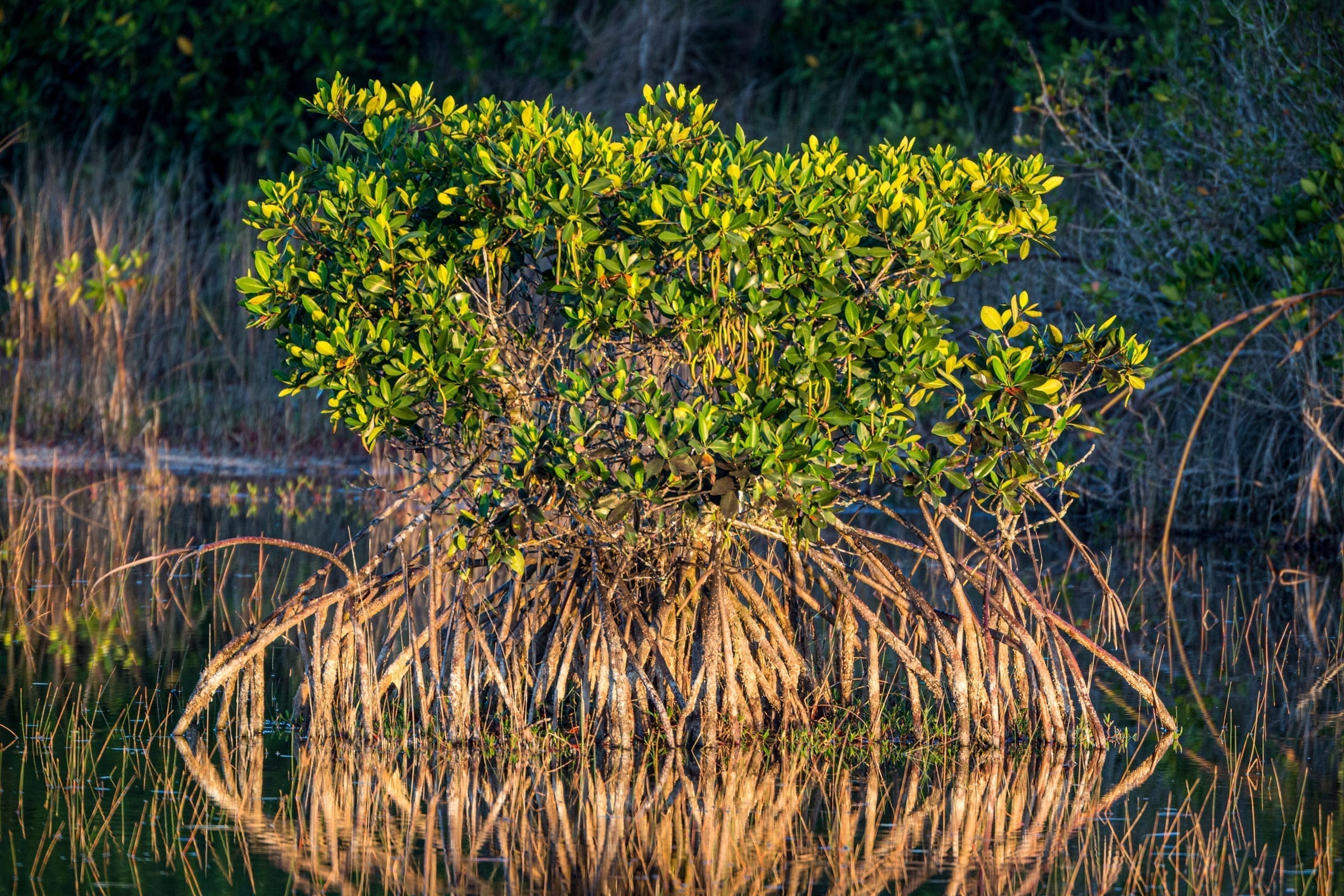
- Mangroves are excluded and go to the Mangrove Trimming and Preservation Act instead.
“Charlotte County prohibits Heritage Tree removal outright — and FS 163.045 preempts that prohibition for a documented hazardous tree on a detached single-family lot.”
What needs no permit in Charlotte County
One thing the county does prohibit outright: speculative clearing — grubbing and root removal on a lot with no intention to build. Mulching, which stays above the surface and allows stump grinding but not root removal, is treated as maintenance instead.
- Trimming and pruning your own trees. No permit. The county says so in writing in its Guide to Environmental Permitting; sound horticultural trimming is expressly exempt in the code. Pruning must follow the ANSI standard.
- Trees under 4 in caliper measured 12 in above grade, and palms with less than 6 ft of clear trunk.
- Dead trees.
- FLEPPC Category I AND Category II invasives. Every other jurisdiction in this section stops at Category I. Charlotte County is the only one that exempts Category II as well.
- Invasive vegetation removed by hand. Hand tools clean up a lot without a permit; bring in machinery larger than a standard lawnmower and the permit requirement returns.
- Downed vegetation and exotic or invasive plants on an unimproved lot, as long as machinery is not involved.
- Trees within the building-construction footprint — structure, driveway, septic — and within 6 ft of it. This is also a fee exemption under § 3-9-100.3(h).
- Projects of 1,000 sq ft or less, which fall outside the requirements.
- Utility, drainage, and road right-of-way work.
When the permit does apply — trigger, fee, and the form
- Trigger: any tree 4 in or more in caliper, measured 12 in above grade, or any palm with 6 ft or more of clear trunk (§ 3-9-100.3).
- Residential application: $70. Commercial or multi-family: $80.
- Authorization: $1.00 per caliper inch, waivable through a Memorandum of Exemption of Fees — that box is on the application form itself. Exempt trees, including exotics and trees within or within 6 ft of the development footprint, are left off the fee calculation entirely.
- The form: Charlotte County publishes it as the Tree Permit Application Package, with a Single-Family Tree Permit Package and a short-form Tree Permit Application as alternatives. All three are linked in Sources below. The application has four boxes — Tree Preservation, Tree Removal Authorization, Memorandum of Exemption of Fees, and No Tree Affidavit.
- No Tree Affidavit: if the parcel has no trees that meet the threshold, a notarized affidavit saying so is what you file instead of an application. It is the piece homeowners most often skip.
- Submittals: a site plan or tree survey, signed and sealed, plus a Protected Species Assessment where applicable.
- Office: Community Development, 18400 Murdock Circle, Port Charlotte. 941.743.1964, PlanningZoning@CharlotteCountyFL.gov. Barricade inspections for preserved trees are scheduled at 941-743-1205.
- Complete clearing of a property is not allowed without an associated building permit.
Tree points — preservation beats planting
- Compliance runs on tree points, not tree counts. One tree point is required for every 2,000 sq ft, or fraction thereof, of development.
- Preserving an existing tree is the county's preferred method and earns the points without buying stock. An approved barricade must go around the drip line before clearing and stay up through construction, with an inspection scheduled at 941-743-1205.
- Installed trees count toward points at a minimum of 2 caliper inches and 8 ft of height from grade.
- Citrus trees do not count for points.
- Prohibited species — the undesirable and exotic list — may not be planted at all.
- The county publishes the point math and the eligible species together as the Tree Point Worksheet & Approved Tree List — linked in Sources below.
Heritage trees
- Heritage Tree: Cypress, Oak, or Pine at 30 in DBH or larger, or a multi-stem tree with summed diameter of 45 in or more.
- Removal or damage of a Heritage Tree is prohibited, and heritage trees must be preserved except in legitimate hardship situations authorized by the Zoning Official.
- On developed property, the replacement requirement or fee is waived when a certified arborist documents advanced decline, or a professional engineer documents structural damage.
- Where replacement applies: inch-for-inch replanting, or $150 per DBH inch into the Native Tree Replacement Fund.
- FS 163.045 preempts the prohibition entirely for a documented hazardous tree on a detached single-family lot.
City of Punta Gorda
Punta Gorda's threshold is three times Charlotte County's and the permit is free. Trees under 12 in DBH are outside the requirement. At 12 in DBH or larger, a permit is required to cut, destroy, damage, remove, or poison any native or approved non-native tree (Ch. 26 Art. 12 § 12.14). The constraint is the approval standard, not the cost.
- Fee: no charge.
- Approval criteria, supported by an arborist report: the tree is a hazard to life or property that cannot be mitigated without removing it; the tree is dying or dead beyond practical restoration; or it has a disease transmissible to other trees.
- Emergency removals: phone or email notice to the city is sufficient.
- Replacement is required under § 12.14 only if removal drops the property below minimum landscape requirements.
- Apply: Urban Design, 326 W Marion Ave. The owner applies, or an agent with written owner authorization. The plan must show existing structures — house, pool, driveway — the location of all existing trees on the property, and the trees proposed for removal. The city's Tree Removal and Tree Removal Permit Request pages are linked in Sources below.
- Invasive exemptions and penalty amounts are not published — confirm with Urban Design before removing an invasive at 12 in DBH or larger.
Penalties, and why the check happens first
The math on the front end is a $70 application and $1 per caliper inch, and most routine yard work does not need either. Permit questions get flagged during the estimate; we check the parcel's jurisdiction before quoting, and a photo bid costs nothing. Where a permit is required the application is the owner's — Community Development at 941.743.1964 is the office that reviews it.
- Code board fines up to $250 per day.
- Unauthorized removal: 4× the original fee on a first offense, escalating for repeats.
Frequently asked.
Do I need a permit to trim my trees in Charlotte County?
No. Charlotte County states in its Guide to Environmental Permitting that a permit is not required to trim or prune a tree on your own property, and sound horticultural trimming is expressly exempt in the code. Pruning must follow the American National Standards Institute standard. Heritage Trees — Cypress, Oak, or Pine at 30 in DBH or larger — are still protected from damage, so pruning that damages one is a separate problem from the permit question.
Do I need a permit to remove a tree in Charlotte County?
Only above the threshold. A permit is required for a tree 4 in or more in caliper measured 12 in above grade, or a palm with 6 ft or more of clear trunk (§ 3-9-100.3). Below that, no permit. Dead trees are exempt, FLEPPC Category I and II invasives are exempt, trees within or within 6 ft of a construction footprint are exempt, and projects of 1,000 sq ft or less fall outside the requirements. FS 163.045 clears a documented hazardous tree on a detached single-family lot regardless of size. Charlotte County has no single-family acreage exemption, so above the threshold and outside the exemptions the trigger applies on an ordinary house lot.
Can I remove Brazilian pepper without a permit in Charlotte County?
Yes. Charlotte County exempts both FLEPPC Category I and Category II invasives — the broadest invasive exemption in Southwest Florida. One condition matters: removal by hand needs no permit, but using machinery larger than a standard lawnmower puts the work back under the permit requirement. Downed vegetation and exotics on an unimproved lot are also permit-free as long as machinery is not involved. Confirm the species identification before the work starts.
How much is a Charlotte County tree removal permit?
$70 for the residential application, $80 for commercial or multi-family, plus $1.00 per caliper inch for the authorization. The per-inch charge can be waived through a Memorandum of Exemption of Fees, and exempt trees — exotics, and trees within or within 6 ft of the development footprint — are left off the calculation entirely under § 3-9-100.3(h). Heritage tree replacement, where it applies, is inch-for-inch replanting or $150 per DBH inch into the Native Tree Replacement Fund.
What is a No Tree Affidavit?
A notarized affidavit filed with Charlotte County Community Development stating the parcel has no trees that meet the permit threshold. It is the substitute for a tree survey and application when nothing on the lot qualifies, and it is one of the four boxes on the county's own Tree Permit Application — linked in Sources below. File it through Community Development, 18400 Murdock Circle, Port Charlotte, 941.743.1964.
How many trees does Charlotte County require me to plant?
Compliance runs on tree points, not tree counts: one tree point for every 2,000 sq ft, or fraction thereof, of development. Preserving an existing tree is the preferred method and earns points without buying stock — barricade the drip line before clearing and schedule the inspection at 941-743-1205. Installed trees count at a minimum of 2 caliper inches and 8 ft of height. Citrus does not count. The county's Tree Point Worksheet & Approved Tree List has the math and the eligible species.
Does Punta Gorda charge for a tree removal permit?
No charge, and trees under 12 in DBH do not need one at all. At 12 in DBH or larger a permit is required for any native or approved non-native tree under Ch. 26 Art. 12 § 12.14, approved on an arborist report showing a hazard that cannot be mitigated without removal, a tree dying or dead beyond restoration, or a transmissible disease. Emergency removals can be reported by phone or email. Apply through Urban Design, 326 W Marion Ave.
Got a question on your specific tree?
Articles are useful, but a real photo bid gets you a species-specific answer for your property in writing.
Sources.
Every threshold, fee, and code section on this page traces to a primary source below. Ordinances change — click through and confirm with the jurisdiction before relying on any of it.
- Charlotte County — A Guide to Environmental Permitting in Charlotte County, PDF ("A permit is not required to trim or prune a tree on your own property"; hand-removal and invasive exemptions)
- Charlotte County — Tree Permit Basics brochure, PDF (tree points, caliper measurement, speculative clearing)
- Charlotte County — Tree Permit Application Package, PDF (fee worksheet: $1.00/caliper inch + $70 single family / $80 commercial)
- Charlotte County — Single-Family Tree Permit Package, PDF
- Charlotte County — Tree Permit Application, short form, PDF
- Charlotte County — Tree Point Worksheet & Approved Tree List, PDF
- Charlotte County — Tree Fact Sheet, PDF
- Charlotte County — Residential Tree Permit page ($70 residential fee, heritage tree preservation, clearing requires a building permit)
- Charlotte County — Commercial Tree Permit page ($80 commercial fee)
- Charlotte County — Community Development Forms & Documents index
- Charlotte County Code § 3-9-100.3 — Tree Removal (trigger, exemptions, § 3-9-100.3(h) fee exemptions)
- City of Punta Gorda — Tree Removal (Landscape, Urban Design)
- City of Punta Gorda — Tree Removal Permit Request
- City of Punta Gorda Code Ch. 26, Land Development Regulations (Art. 12 Landscaping Standards, § 12.14), PDF
- § 163.045, Fla. Stat. — Tree pruning, trimming, or removal on residential property (Florida Senate, 2025)
- § 163.045, Fla. Stat. — full text (Online Sunshine)